VESTIGES OF WILDNESS: WHY THE FATE OF ROADLESS AREAS IS CRITICAL TO OUR FUTURE

The 2001 Roadless Rule created a new type of land designation called Inventoried Roadless Areas and is responsible for protecting a large number of un-roaded landscapes across a wide range of regions and ecosystems throughout the national forest system. In total, the rule safeguards 58 million acres of intact wildlife habitat and backcountry, more than any federal action besides the Wilderness Act of 1964. 

Places like roadless areas, large areas where natural processes proceed free from excessive industrial incursion, are increasingly rare. They are places where the Earth is able to retain some of its wildness. They are critically important bastions of biodiversity and some of the last remaining refuges for species with little or no other suitable habitat left. Most are also places where recreation is quiet and where human visitors move at the speed of foot, hoof, and bicycle.   

Today, the rule that established and protects Inventoried Roadless Areas is under attack.


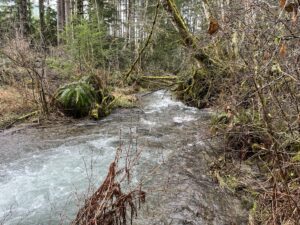
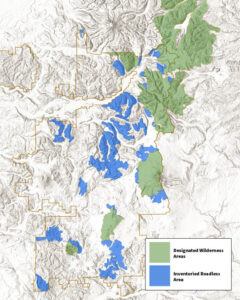
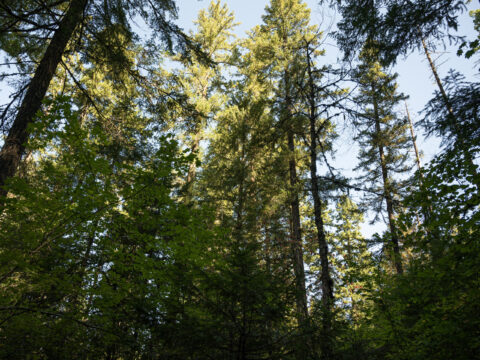
The Gifford Pinchot National Forest contains a significant area of wilderness and roadless areas


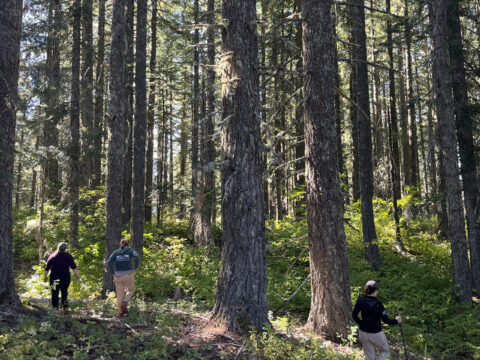
We’re fortunate that significant portions of the landscapes we work to protect in the southern Washington Cascades are currently designated as Wilderness or Inventoried Roadless Areas. The existence of these large areas of connected and un-roaded lands plays a significant role in our region’s appeal to outdoor enthusiasts from around the world. For those of us fortunate to have the opportunity and ability to venture in, spending time in the Roadless and Wilderness areas of the Gifford Pinchot can be a moving and meaningful experience. Stepping onto a place on Earth miles from the nearest road can inspire wonder, awe, inspiration, humility, a feeling of connection to and appreciation for the natural world, or any number of other unique, powerful, even spiritual experiences that make our lives fuller and richer.


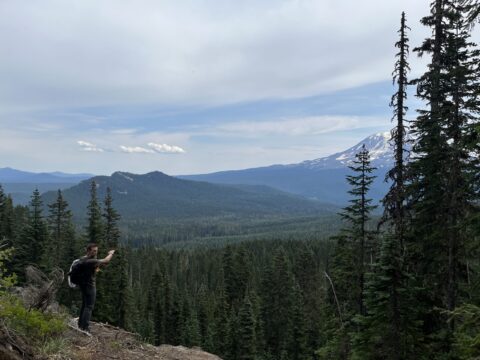
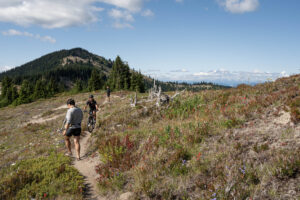
Roadless areas in the GPNF provide unique outdoor recreation opportunities


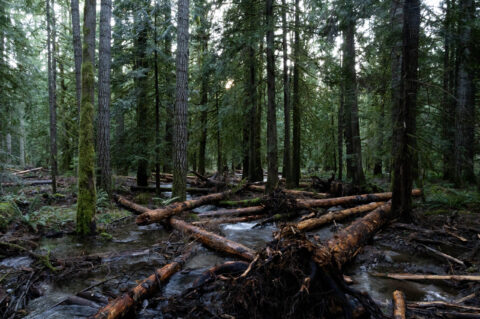
The Gifford Pinchot’s roadless areas also play a role in sustaining our region’s wildlife and biodiversity. The ecological benefits of large intact areas of wildlife habitat extend far beyond the boundaries put in place to preserve them. In addition to providing refuge for species that need a lot of space away from human development to thrive, un-roaded areas provide space where species impacted by over-hunting or trapping, like fishers, martens, or the iconic grey wolf, have a better chance of making a recovery.


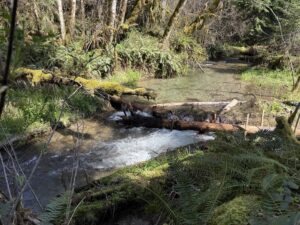
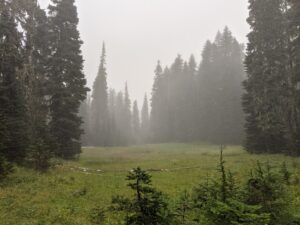
A meadow in one of the GPNS’s Inventoried Roadless Areas


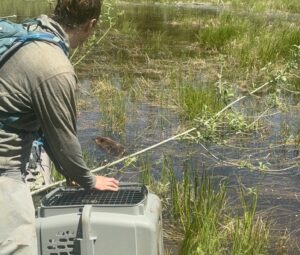
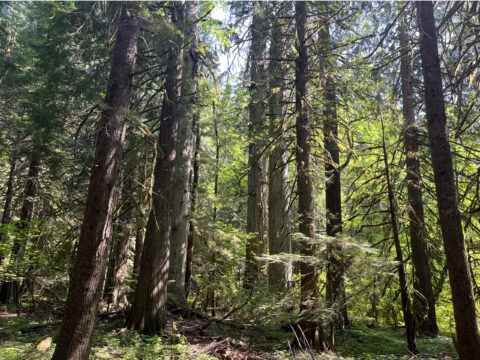
Un-roaded areas provide space where species like the grey wolf could make a recovery


The continued existence of these Inventoried Roadless Areas is now threatened by the Trump administration’s stated intention to reverse the Roadless Rule, enabling and encouraging exploitation of intact ecosystems that have long been off-limits to commercial interests. The upcoming fight over the rule will have profound impacts for wildlife populations, the preservation of biodiversity, and outdoor recreation here in the Pacific Northwest and across the country. 

CFC is ready to respond once the administration follows through on its plans. Our partners and allies are ready to respond. And we’ll share the ways you can speak up and take action in defense of roadless areas when the moment for public comment arrives.

Part two of our series on the 2001 Roadless Rule, where we dive deeper into the history of the rule and the impacts of roads themselves on forest ecosystems, is coming next week. 

THE TRUMP ADMINISTRATION HAS NOW PUT 50% OF ALL NATIONAL FOREST LANDS AT RISK

Details regarding the Trump Administration’s plans to weaken environmental regulations and increase the speed and scale of timber production on federally managed lands are beginning to take shape, and the situation is developing at an alarming rate. 

In a recent blog post, we discussed a number of recent executive orders that framed domestic energy and timber production as national security emergencies and directed agency officials to explore ways to circumvent environmental regulations to accelerate the pace and scale of timber and energy projects. In that blog, we noted that “…many of the aspects of these executive actions will include administrative processes that will create opportunities for CFC and the public to engage with and, eventually, litigate if necessary.”     

When reading and discussing implications from the executive orders internally, we noted that wildfire wasn’t addressed, and we were concerned that in the future, the threat of wildfire would be used as an unwarranted pretense to skirt environmental laws while simultaneously hindering the ability of organizations like CFC to effectively challenge these policy changes and actions. 

Unfortunately, that is exactly what we are beginning to see happening. 

Federal officials have now begun implementing changes and policies to comply with recent executive orders to increase domestic timber production. Brook Rollins, the new Secretary of Agriculture, who oversees the department housing the U.S. Forest Service, and Chris French, Acting Associate Chief of the Forest Service, set a goal to increase timber production by 25% and took actions that could dramatically limit the effectiveness of environmental regulations. 

Last week, Secretary Rollins issued an emergency declaration affecting approximately 50% of all national forest lands.

Rollins’s declaration relied on authority created by the Biden-era Infrastructure Investment and Jobs Act (IIJA). The emergency authorities created by the new law are intended to enable land managers to more quickly take actions to address issues like reducing wildland fire risk to communities, critical infrastructure, or key ecological values. However, we, and others, were concerned that these provisions could be interpreted and applied quite broadly, and although the IIJA limited the types of actions managers could take to address the emergency, it did not include limits regulating the size of the projects.

Of greater concern is that the memos also directly calls out other existing emergency authorities, which would allow for projects to be completed before going through environmental assessment, Endangered Species Act (ESA) consultation, and tribal consultation, and encourage the use of emergency authorities as much as possible. For example, the memo issued by Chris French notes that the agency will be issuing guidance by mid-April on how to do the bare minimum to comply with environmental and historic preservation laws.

Taking all of these directives together, there is a real danger that the new declarations will be used to implement questionably justified, large-scale timber sales and similar projects with little oversight.

So what do these recent updates mean for our region? 

These recent actions by the Administration could result in the implementation of poorly planned projects before stakeholders can weigh in and concerned groups can litigate. There is clear potential for harm to our forests and wildlife created by these new directives, but it is still unclear exactly how individual national forests will develop and implement projects following the new direction from Washington, D.C. 

In other words, although the recent executive orders and the actions we’re beginning to see agency officials take in response are serious threats to the long-term health of our national forests, we are still unable to say for certain what the local impacts may be. We expect the forthcoming guidance from those leading the Forest Service to project planners will be useful in determining what these directives will actually mean at the local level. 

CFC and our partners are monitoring these developments closely and are gearing up to fight back and stand up for forests, watersheds, wildlife, and communities. The onslaught of attacks being levied against environmental regulations is complex and developing rapidly. We will continue to analyze what is happening and try to clearly explain what these actions mean for the places we treasure and fight to protect. To stay up to date and receive alerts when there are opportunities to fight back, sign up for our email list. Once signed up, you’ll receive updates in our monthly newsletter, action alerts that empower you to speak out and make a difference, and learn about events, volunteer opportunities, and other steps you can take to make local ecosystems healthier and more resilient. 

ACTION ALERT: TELL THE WA STATE LEGISLATURE TO FULLY FUND THE WILDFIRE RESPONSE, FOREST RESTORATION, AND COMMUNITY RESILIENCE ACCOUNT

Currently, the Washington State Legislature is working on finalizing the state’s budget for the next biennium. As you may have seen in the news, the state anticipates a budget shortfall and is seeking areas to make budget cuts. One place they are looking to make cuts is appropriations for the Department of Natural Resources’ (DNR) Wildfire Response, Forest Restoration, and Community Resilience Account (2SHB 1168). These cuts will impact the important work that DNR does, including funding forest collaboratives, monitoring forest treatments, carrying out scientific studies and analysis on federal forest lands,  and providing funds to help communities become more resilient to wildfires. 

DNR’s role in maintaining community safety and forest resilience will be especially crucial in the coming years due to the declining federal funding and significant layoffs of federal workers. 

The original plan was to fund these programs with $125 million per biennium for at least ten years, starting in 2021. However, the legislature has gone back on that promise in both the House and Senate versions of the budget. 

CFC will be reaching out to key legislators to ask them to fully fund DNR’s Wildfire Response, Forest Restoration, and Community Resilience Account at the requested and promised level of $125 million. If you are a resident of Washington state, please contact these key legislators and join us in asking them to fully fund the account at the requested level of $125 million. 

You can email or call these legislators directly with your message. These are the legislators who are currently working on the budget. It’s important for them to hear from constituents about what state functions are important to them:

Sen. June Robinson, D: June.Robinson@leg.wa.gov (360) 786-7674

Sen. Derek Stanford, D: Derek.Stanford@leg.wa.gov (360) 786-7600

Sen. Chris Gildon, R: Chris.Gildon@leg.wa.gov (360) 786-7648

Sen. Nikki Torres, R: Nikki.Torres@leg.wa.gov (360) 786-7684

Rep. Timm Ormsby, D: Timm.Ormsby@leg.wa.gov (360) 786-7946

Rep. Mia Gregerson, D: Mia.Gregerson@leg.wa.gov (360) 786-7868

Rep. Nicole Macri, D: Nicole.Macri@leg.wa.gov (360) 786-7826

Note, we expect budget negotiations will happen very quickly, so please send your message as soon as possible to have the most chance of success – preferably by Wed, April 16th. 

We’ve created an email template for you to use, provided below. Feel free to personalize your message before sending.  


Email Subject: Please fully fund DNR’s Wildfire Response, Forest Restoration, and Community Resilience Account


Dear Senators and Representatives, 

[My name is ____, a resident of ____, WA]. I am reaching out to request that the legislature fully fund the Department of Natural Resources’ (DNR) Wildfire Response, Forest Restoration, and Community Resilience Account at the full amount requested, $125 million (2SHB 1168). This money helps DNR do critical work that helps prepare communities for wildfire, support forest collaboratives across the state, support national forests with needed capacity, conduct monitoring of forest treatments, and many other activities that directly benefit communities and all forests in the state. 

At a time when the federal government is pulling back funding, it is imperative that the state is able to step up. Therefore, please fund DNR’s Wildfire Response, Forest Restoration, and Community Resilience Account (2SHB 1168) at the requested amount of $125 million. 

Thank you for your time,

[Name]

[WA city of residence]


Taking action to contact these key legislators now could have a huge impact on forest and community health in Washington state. Please help us keep these important programs funded in the next biennium. 

If you have any questions, feel free to reach out to Ashley at Ashley@cascadeforest.org.

WHAT DO THE TRUMP ADMINISTRATION’S EXECUTIVE ORDERS MEAN FOR OUR REGION?

Over the past months, the Trump Administration has issued a number of executive orders that have alarmed conservationists across the country and the Pacific Northwest in particular. The speed and volume of these orders have left many unsure of what their impacts will be and what can be done to ensure that communities, wildlife, and ecosystems in our region are protected.

To help answer these questions, CFC’s Communications Manager, Bryn Gray Harding, sat down with CFC’s Policy Manager, lawyer and environmental law and policy expert, Ashley Short, for a discussion about these orders and what they mean for the places CFC is working to protect. 

A transcript of that conversation, edited for length and clarity, is below.


Bryn Gray Harding

There have been a number of executive orders issued by the Trump Administration recently aimed at changing the way public resources are used, specifically related to increasing energy and timber production. Looking at these orders as a whole, what is the administration trying to accomplish? 

Ashley Short

There have been several Executive Orders aimed at increasing domestic energy production at all phases, and then other orders aimed at increasing timber production. These actions are largely focused on increasing domestic output and reducing reliance on imports, in part by speeding up how quickly projects happen. These orders direct agencies to use existing emergency authorities in potentially questionable ways and frame timber and energy production in terms of national security. Some timber and energy projects take a long time to get permitted from start to finish because agencies have to comply with current environmental laws. We would say that that’s a good thing. It helps make fine-tuned projects that don’t cause undue harm for species and ecosystems. Speaking very broadly, the administration is trying to speed up timelines for projects on federally managed land through these orders.

BGH

Do these orders create a threat of immediate changes to logging and mining processes in the places we’re seeking to protect? How are these actions actually going to impact conditions on the ground? 

AS

I don’t think we’re going to see things like old-growth logging on the Gifford Pinchot National Forest directly resulting from these executive orders for a number of reasons. The timber executive orders, in particular, are really just focused on streamlining how fast projects get done using existing authorities. Are there things in there that are concerning? Yes. Are there things we will monitor closely? Absolutely. However, many of the aspects of these executive actions will include administrative processes that will create opportunities for CFC and the public to engage with and, eventually, litigate if necessary.

BGH

What are the things that you’re concerned about?

AS

There are a number of things. For example, in one of the orders about timber, there is a note about allowing agencies to determine on their own, without meaningful oversight, whether they are complying with the Endangered Species Act. So, for example, if that authority to determine compliance was given to the Forest Service, the Forest Service would be deciding whether or not there projects are complying with the Endangered Species Act instead of another agency, like the U.S. Fish and Wildlife Service, looking over the Forest Service’s plans and determining whether or not they’re complying with the ESA. So, that could be concerning.

But even on that issue, we’re in a “wait and see” space. The Executive Order doesn’t mandate that that change happen; it directs agencies to explore opportunities to determine if it can happen. It’s not something that’s immediately happening. These orders are kicking off many processes to investigate and change rules, and we will have opportunities to be engaged in that.

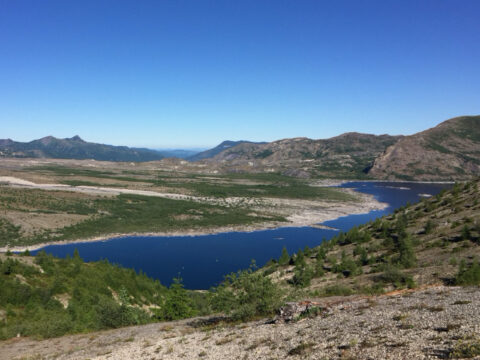
The one thing that poses a more immediate threat is that copper is now listed as a critical mineral, which might increase the urgency regarding our efforts to protect Mount St. Helens from a gold, copper, and molybdenum mine. But again, we’re waiting to see how these changes around domestic mineral production are going to be implemented.

BGH

A lot of the text of these orders seems to suggest or imply that decision-making agencies should find ways to circumvent things like the Clean Water Act and the Endangered Species Act. Should we expect to no longer be able to rely on these laws to protect our shared natural resources?

AS

So yes, the orders are trying to minimize the effectiveness of laws like the National Environmental Policy Act, the Clean Water Act, and the Endangered Species Act. However, a lot of what these orders are doing is about using existing emergency authorities or invoking national security to speed processes up. In a lot of these cases, these emergency authorities are defined by law or have some sort of limitations on them. So, you can challenge whether using emergency authorities to avoid environmental reviews is justified or not in court. Invoking emergency authority isn’t a way for the administration to do whatever they want without any process at all.   

BGH

Are there things that CFC is doing right now or that our supporters can be doing to help push back against some of these actions?

AS

That’s a good question. At the moment, we are primarily watching to see what will actually happen. Many of the processes agencies are being ordered to begin have tight timelines. For example, some are directing agencies to develop these recommendations within the next 10 or 30 days. I believe that in the coming months, we will start to see many of these processes begin, and we must be prepared to articulate why these are poor ideas and what we stand for. 

When the time is right, we will create opportunities for our supporters to take action and make their voices heard!  Grassroots public engagement will be essential. Right now, we are closely monitoring the situation and working with coalitions of like-minded environmental groups to have strength in solidarity. Things are changing daily, all of which is impacted by the significant number of federal workers who were fired or in the process of losing their job. It’s still uncertain how quickly or slowly these changes or potential changes will occur. In short, we need to stay on top of everything, and we need to be ready to act when the time is right. 

BGH

Is there anything else that you think would be important for CFC supporters to know or to understand or information that would be helpful when they see a post or headlines about these orders?

AS

Yeah, at least from a local perspective, I think it’s key to understand how important the forest collaboratives* are and will be over the next four years. Our local Forest Service is invested and engaged in those spaces, and we’re hopeful that continuing to engage locally on specific projects and building on those existing and strong relationships will lead to outcomes that CFC and our supporters can support or at least live with. 

I think staying locally focused and being engaged with our local Forest Service staff is a good way to help protect the Gifford Pinchot National Forest in the long-term. We also intend to continue supporting individual civil servants who are being asked to do more with fewer resources, less capacity, and evaporating job security. Yes, it’s quite chaotic at the top, but we and our forest collaborative partners can ensure that decision-making doesn’t veer too far in the wrong direction, at least locally. And if there are pressures from above that mandate poor practices, then we will stand up as the watchdog we are, to hold them accountable, even if that means litigation. I think this is expected of us internally and externally. When and if this time comes, we’ll need strong backing from our supporters then too. 

* Forest Collaboratives are organizations that exist to create dialogue among federal agencies, Tribal governments, conservationists, the timber industry, other local governments, local businesses, and rural community members about land management projects like timber sales and restoration initiatives. Forest Collaboratives allow groups and individuals holding diverse perspectives and priorities to hear about and weigh in on projects from the earliest stages of planning processes. They help these various interests work together to create zones of agreement and to identify and address disagreements or concerns. By supporting these collaboratives and taking their recommendations seriously, agencies like the U.S. Forest Service can often address concerns about upcoming projects before plans are finalized, helping avoid unnecessary conflicts or litigation. CFC is a founding member and active participant of two forest collaboratives that help guide land management decisions in the Gifford Pinchot National Forest.