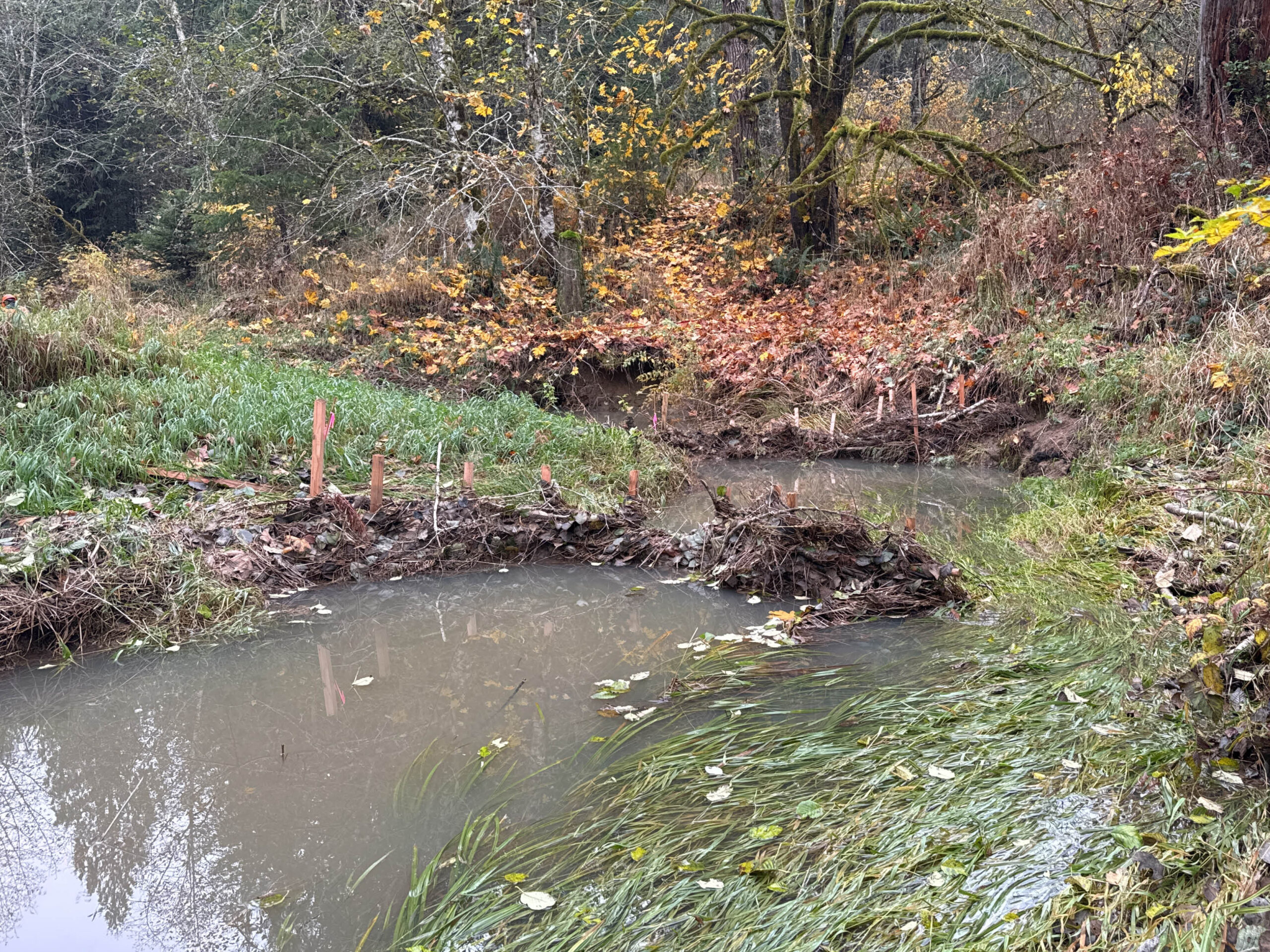
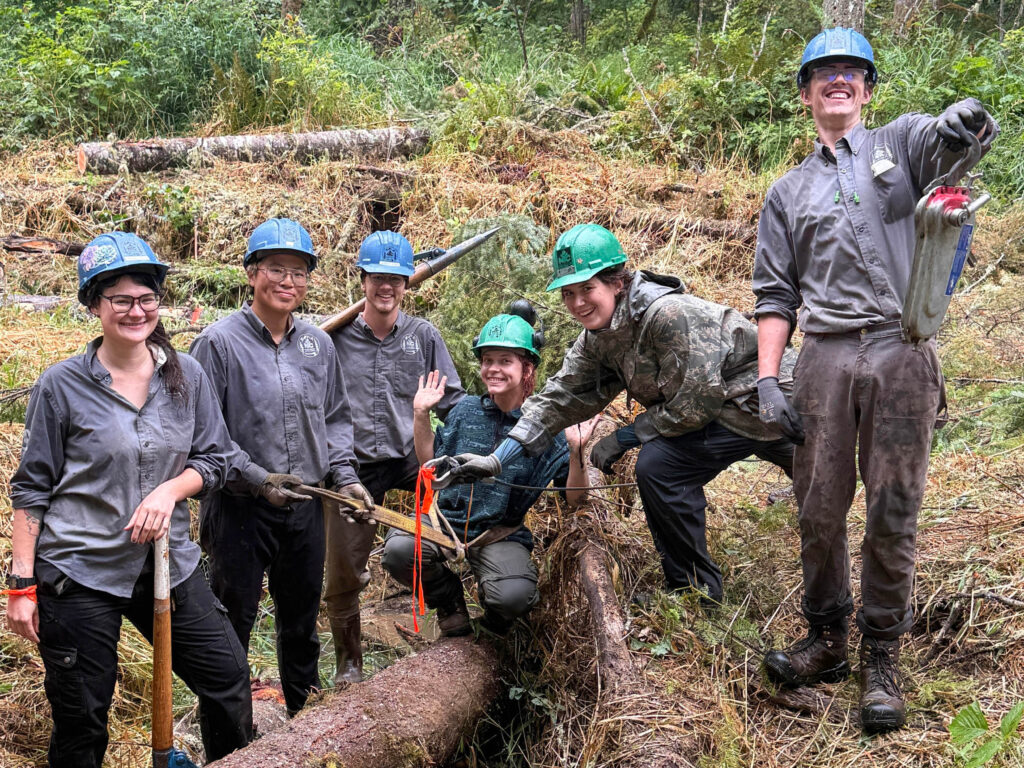
Instream work is underway at Salmon Creek! This summer, CFC installed more than 30 woody structures on two tributaries of Salmon Creek. Our efforts will create spawning grounds for salmon, provide rearing habitat for juvenile salmon and larval lamprey, and improve drinking water quality for the cities of Vader and Castle Rock.
This project marks the first time CFC has partnered with Northwest Youth Corps, an AmeriCorps service program that connects young adults with natural resource work experiences. Working with a conservation corps crew is mutually beneficial for non-profits like CFC and the corps program. We are able to secure a cost-effective labor source while crew members get hands-on educational and work experience on unique projects.


Over the course of two weeks in August and one week in November, NYC crews were the boots on the ground at Salmon Creek where they built instream woody structures and planted 900 trees and shrubs. At CFC, we primarily use low-tech, process-based restoration (LTPBR) techniques for instream work, meaning the type of structures we install are relatively simple, do not involve engineering or the use of heavy equipment, and mimic beaver dams or naturally occurring instream woody debris.
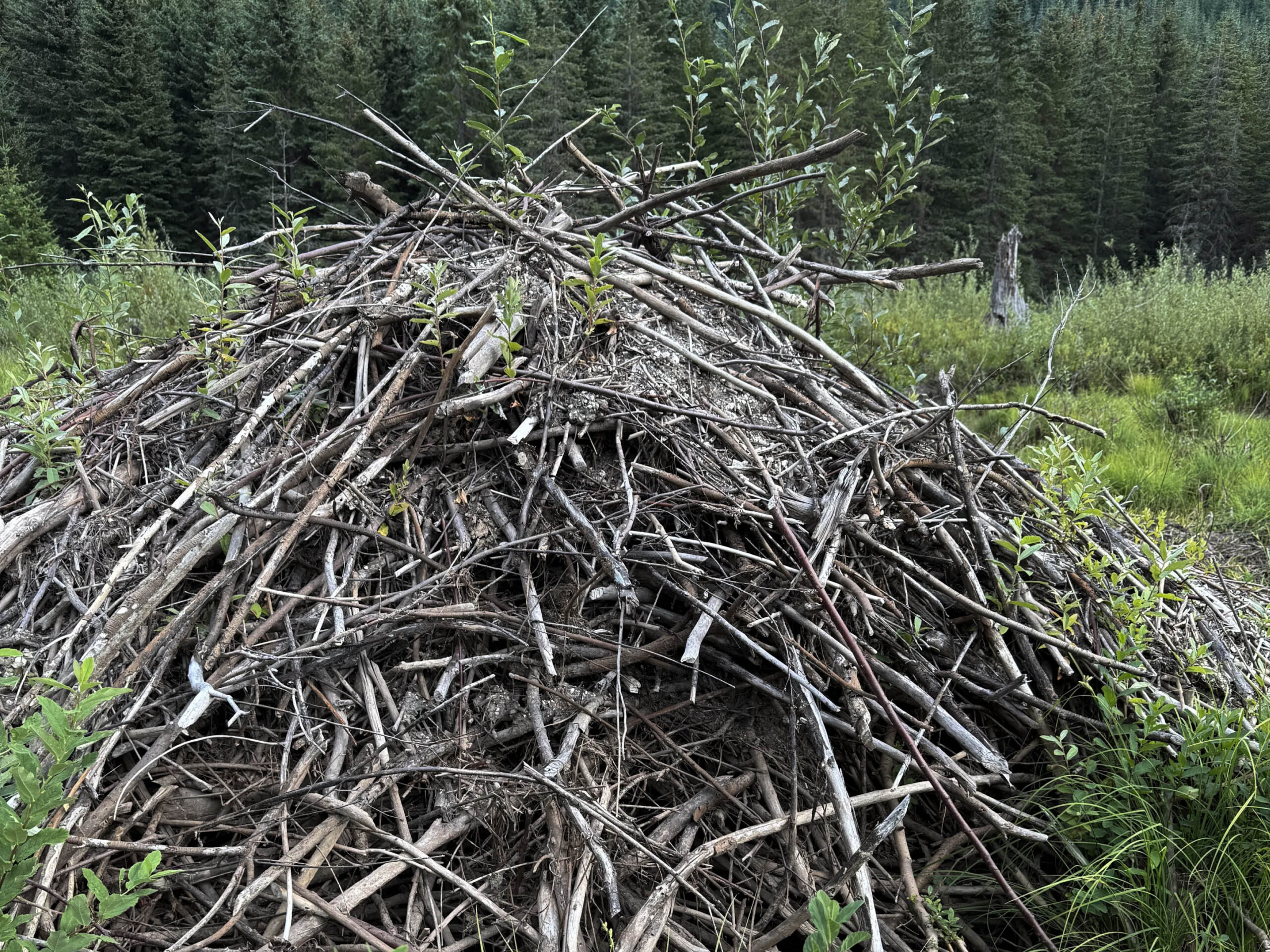
In August, the crew used a non-powered machine called a griphoist, simple tools like peaveys and timber carriers, and team work to move large pieces of wood. The crew built beaver dam analogues (BDAs) and pulled logs into the stream to create woody structures. Over time these structures will create pools, slow the flow of water, and sort spawning gravels all of which will benefit salmon and larval lamprey.

In November, the work continued with native tree and shrub planting near the instream structures. The crew planted willow, cottonwood, and dogwood live stakes that will establish roots and leaf out in the spring, outcompeting the invasive reed canary grass found throughout the restoration area. These plants will shade the stream which will cool water temperatures, providing another benefit to salmon and other aquatic organisms.

We use LTPBR techniques because they can have an outsized impact on the stream relative to the cost and effort required to install these structures. Similarly, early career experiences on projects like Salmon Creek can have an outsized impact on the lives of conservation corps crew members. Early exposure to this kind of work, even for just a few weeks, can inspire crew members to pursue other education and work opportunities focused on instream restoration.
In 2026, CFC will partner with conservation corps crews at Salmon Creek and several other sites as we continue to scale up our instream restoration work throughout southwest Washington.