Cascade Forest Conservancy has submitted official comments responding to the Northwest Forest Plan Draft Environmental Impact Statement.
Thank you to all who joined CFC in speaking out for enhanced protections for mature and old-growth forests and more Tribal co-management with federal agencies.
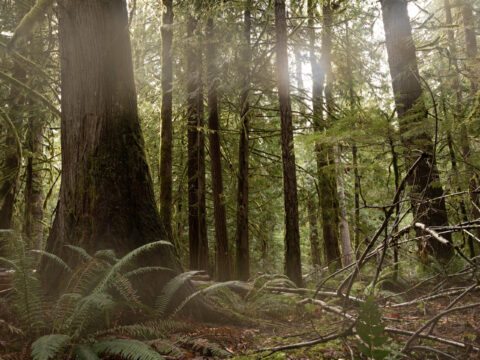
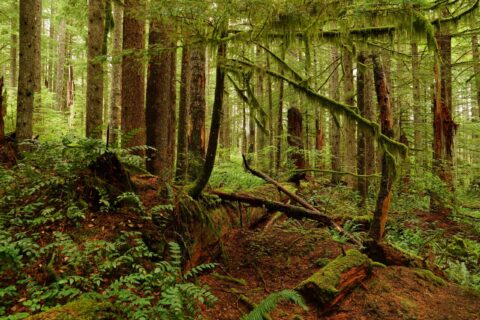
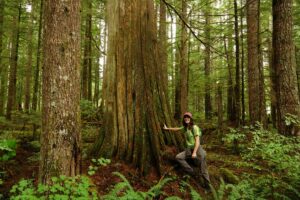
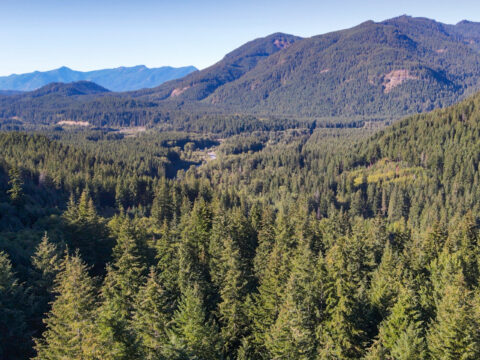
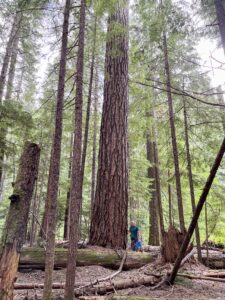
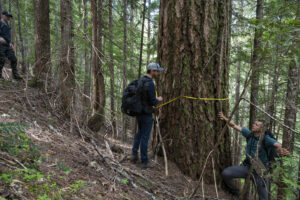
In the northeastern corner of Clark County, southwest of Yale Lake between Canyon and Siouxon Creeks, 135 acres of structurally complex, naturally regenerated, and beautiful mature forests stands approaching old-growth status are about to be lost forever unless urgent action is taken now.
Washington residents, especially residents of Clark County, can help make a difference by asking our new Commissioner of Public Lands, Dave Upthegrove, to do all he can to honor the request of Clark County Council and residents to reverse the Dabbler timber sale.
Photos courtesy of Legacy Forest Defense Coalition
On January 15th, Clark County’s Councilors sent a formal request to Washington’s new Public Lands Commissioner, Dave Upthegrove, asking him to postpone harvest of the Dabbler timber sale and create a framework for conserving older forests throughout the county.
In their request, the Clark County Council, the beneficiary of funds provided by the sale, wrote:
“Clark County sits at the western foothills of the Cascades near the area impacted by the 1902 Yacolt Burn and contains very few remaining legacy forest resources. The proposed Dabbler sale area contains structurally complex naturally regenerated forest that are approaching old growth and therefore highly valued by our community. Not only do these remnants of our original forests provide wildlife habitat, promote watershed health, and mitigate climate impacts, but they provide public recreation and economic opportunities beyond the dollars generated through harvest alone.”
State decision-makers ignored the County Council’s request and sold the sale at auction on January 30. We’re now asking the new Public Lands Commissioner to do everything he can to undo the sale and protect these forests.
Here is how you can help:
Send an email to Washington Commissioner of Public Lands, Dave Upthegrove (cpl@dnr.wa.gov) asking that he do everything in his power to respect the wishes of the Clark County Council and residents by stopping the Dabbler Timber sale.
Below are talking points to get you started:
I am disappointed that the state’s Board of Natural Resources did not honor Clark County’s request to postpone the harvest of the Dabbler sale. Clark County is the financial beneficiary of the sale and their wishes should be respected.
Healthy mature and old-growth forests are critical to conserving Washington’s wildlife, slowing the acceleration of climate change, and mitigating climate change impacts. Once these forests are gone, they will take hundreds of years to recover, if they ever do.
Although the Dabbler Timber sale was initially approved prior to the start of your term, I am asking you to do anything and everything within your authority to halt the harvest of these rare and beautiful stands of legacy forests before it’s too late.
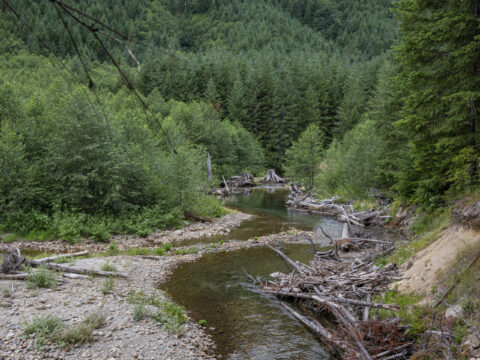
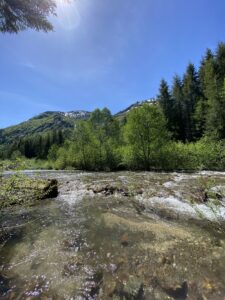
Below its picturesque and much-loved falls (accessible following a quick hike from a parking area along Forest Road 23), Camp Creek flows through a grove of beautiful mature, conifer forest before joining the Cispus River.
Camp Creek is spawning habitat for coho salmon and steelhead, as well as rearing habitat for juvenile Chinook salmon. But like many waterways in the Pacific Northwest, Camp Creek was (until recently) degraded and lacked many of the habitat features that fish depend on.
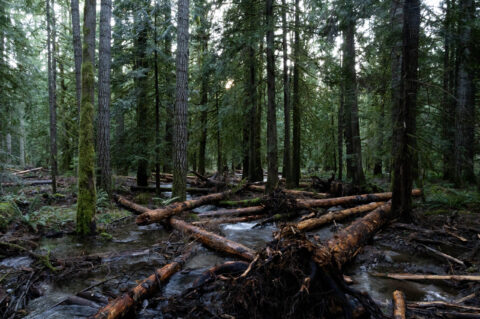
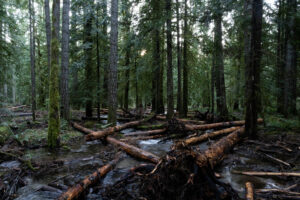
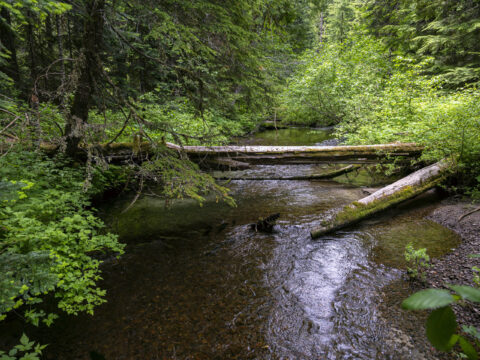
Prior to recent restoration efforts, Camp Creek was heavily channelized and lacked complexity.
Because of factors like a lack of instream wood, Camp Creek had become heavily channelized. Rather than spreading out across the landscape into a complex series of pools and side channels, the stream was flowing quickly in one direction, stripping away much of the gravel and sediment spawning fish depend on.
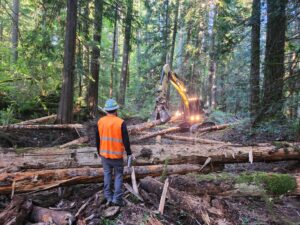
But last summer, CFC oversaw a large aquatic habitat restoration project that is already having significant positive impacts. We installed more than 300 large logs to help Camp Creek re-engage its side channels and add habitat complexity. Because of the positive relationships we’ve built with the Forest Service and other organizations, we were able to complete this work for a fraction of what a project of this scale would typically cost.
CFC worked with local contractors to place more than 300 large pieces of wood into Camp Creek.
During a visit to the site in January, we saw indications that our restoration efforts were having the intended effects. Camp Creek’s side channels were flowing once again. We observed many new pools and other beneficial habitat features that are known to support spawning and maturing salmon and steelhead. We even observed evidence of recently spawning fish and feeding eagles!
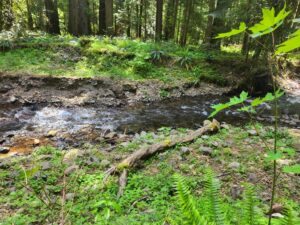
In-stream wood at Camp Creek is re-engaging side channels and improving habitat for salmon and steelhead
Our work at Camp Creek is complementing other nearby aquatic restoration work—such as a multi-year aquatic restoration project happening nearby at the confluence of the Cispus River and Yellowjacket Creek—making this entire segment of the watershed better for fish and wildlife.
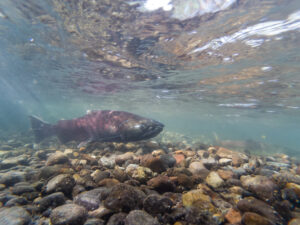
A spawning Chinook salmon
As climate change continues to alter seasonal precipitation and flow patterns and warm water temperatures in streams across the region, projects like this will be essential to conserving local species and ecosystems.
In the Spring of 2023, we shared some exciting news: wolves had finally returned to southwest Washington after a century of absence. The state’s Department of Fish and Wildlife (WDFW) confirmed that a male, WA109M, and an adult female had been seen traveling together in winter (meeting the state’s definition for a pack) in a sparsely populated area along the southeastern border of the Yakama Reservation.
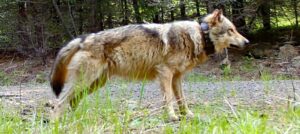
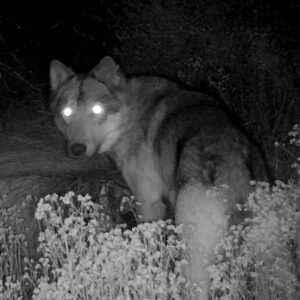
WA109M, photographed by a trail camera in 2021. WDFW
Sadly, the Big Muddy Pack, named for the Big Muddy River, is no more.
Beginning in October 2023, monthly WDFW monitoring reports began to note that agency officials were unable to locate the pack’s female. Months later, the Washington Gray Wolf Conservation and Management 2023 Annual Report, released April 2024, confirmed what some had feared: southwest Washington no longer had a wolf pack. Then this October, WDFW, along with the US Department of Fish and Wildlife confirmed that both members of the pack have been illegally killed and are offering a $10,000 reward for information related to the death of either animal.
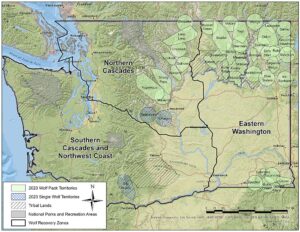
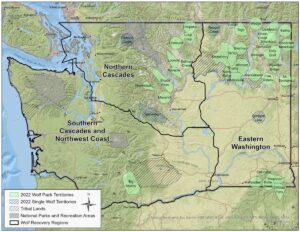
The protected status of gray wolves, both federally and at the state level, is contentious. Here in Washington, a species recovery plan adopted in 2011 divided the state into three regions; Eastern Washington (where the majority of the state’s wolf population reside), Northern Cascades, and Southern Cascades and Northwest Coast. The state’s recovery plan calls for the presence of two breeding packs in each of the three regions for three consecutive years prior to delisting. So far, that condition has not been met. There are currently 33 confirmed packs in the Eastern Washington and Northern Cascades.
Wolf pack territories as of 2023. WDFW
Washington’s overall wolf population is on the rise, despite the loss of the Big Muddy Pack and the enduring absence of wolves in the South Cascades and Northwest Coast recovery region. The state’s latest report shows wolf numbers are up 20% since the previous count in 2022, which, this February, led WDFW to formally recommend that the state reclassify wolves from “endangered” to “sensitive.” So far, no changes to wolves’ protected status has been made.
Wolves are a keystone species and their presence can lead to a cascade of positive ecological impacts in the areas they occupy. The loss of the Big Muddy Pack is a setback for the species’ recovery in southwest Washington, but it’s not the end of the story. As the population of wolves in other parts of the state grows (provided adequate protections remain in place) it is all but inevitable that other wolves will travel south and west, seeking territories of their own. The deaths of WA109M and his mate, as well as the ongoing efforts to delist the species, illustrate that the strong feelings people and policymakers have about the presence of wolves will shape their future and that their protected status is far from settled.
I, like many of us, am a proud huckleberry fanatic, so it’s no surprise that huckleberry season (late July through September) is my favorite time of year to be in the forest.
I love huckleberries. If a huckleberry milkshake is on a menu, I’m ordering it. Did I want a milkshake when I came in? Doesn’t matter. Huckleberry lotion? Slather it on. Huckleberry pie? Huckleberry soda? Huckleberry candies? Absolutely! Huckleberry patch along a hiking trail? There goes my schedule for the day.
To celebrate the huckleberry season and the ongoing efforts of Cascade Forest Conservancy’s staff and volunteers to monitor the efficacy of huckleberry patch restoration efforts, please enjoy these delicious huckleberry facts!
1. Huckleberries have been a culturally significant food source since time immemorial
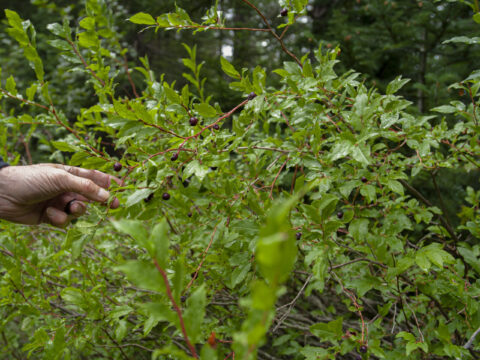
Huckleberries are considered a sacred and culturally significant “first food” among many Indigenous communities in the West, including the Cowlitz Indian Tribe and the Confederated Tribes and Bands of the Yakama Nation. Indigenous communities maintained and enhanced huckleberry fields for centuries by using fire and other techniques to create optimal growing conditions for plentiful berry harvests. A number of adaptations, including fire-resistant foliage, make huckleberry plants resilient to low-intensity fires. Regular burns can even benefit berry production by eliminating competition from less fire-resistant species and allowing more light to reach the forest understory.
Today, huckleberry production is well below the historic estimates we are able to make based on anecdotal observations from Tribes, forest inventory data and historical photos (aerial and other). This is true in forests across the region and at a number of specific, historically important berry patches like the Sawtooth Berry Fields within the Gifford Pinchot National Forest. This decrease is mainly due to fire suppression and the resulting conifer encroachment and increased competition from other shrubs.
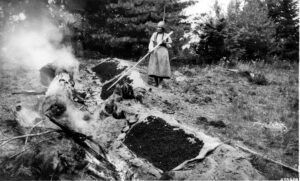
An Indigenous woman drying huckleberries in southwest Washington, 1937
In the Gifford Pinchot National Forest, the U.S. Forest Service is working to restore several huckleberry patches through targeted thinning activities meant to help recreate the growing conditions that existed before the suppression of forest fires and the forced removal of native peoples from their lands.
Cascade Forest Conservancy and our science and stewardship volunteers have been working over the course of several years to assess the impact of these efforts through ongoing monitoring of berry production in the project area.
2. Huckleberries are an economically important forest product
There are efforts underway attempting to produce commercially viable domesticated huckleberries or crossbreed huckleberries with domestic blueberries. However, at this point in time, every huckleberry you have ever eaten or consumed has come from a wild plant somewhere in the forest.
Commercial harvest permits in the Gifford Pinchot National Forest allow individuals to pick up to 75 pounds of berries each harvest season. Depending on the location, year, and whether a picker is selling to a wholesaler or directly to consumers, huckleberries harvested in the forest can fetch local pickers anywhere between $11 to $50 per pound.
3. Huckleberries are exceptionally delicious and nutritious
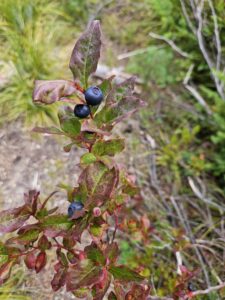
The twelve species of huckleberries that grow in the Gifford Pinchot National Forests are not true huckleberries, but are in fact native blueberries belonging to the genus Vaccinium. True huckleberries are native to the eastern US and belong to the genus Gaylussacia.
Whatever we call them, huckleberries are exceptionally delicious and nutritious. For example, western huckleberries pack in four times the amount of the beneficial antioxidant anthocyanin than commercially produced varieties of blueberries. Compared to their domesticated blueberry cousins, wild huckleberries have a darker color and a deeper, more intense flavor.
The nutrition provided by huckleberries benefits the health of both human and non-human species. The fruits provide important forage for birds, bears, and many other species of native wildlife.
4. Huckleberry cobbler will change your life
While science has not empirically proved it (yet), among us huckleberry fanatics, it is a widely accepted fact that huckleberry cobbler is the most delicious thing a person can eat.
Obtain a free personal use huckleberry picking permit to get everything you need for your life-changing cobbler here. Non-commercial huckleberry permits allow each permit holder to collect one gallon of berries per day, and up to three gallons of berries per year. Ask a ranger where the berries are ripe, and make sure to pay attention to restrictions indicating where you can and can’t pick.
Vancouver, WA — on May 28, the US Forest Service released its final decision about the upcoming Yellowjacket timber sale. The decision came over the objections of concerned conservation groups, who say the agency’s plans do not adequately protect critical habitats and mature stands, and that the cumulative impacts of concentrated timber harvests on the area’s watersheds were not sufficiently considered by Forest Service planners. The Yellowjacket sale will occur on national forest lands in Lewis and Skamania counties east of Mount St. Helens in the Camp Creek-Cispus River and Yellowjacket Creek watersheds. The sale includes a total of 4,651 acres of timber harvest, in addition to various infrastructure and habitat improvement activities.
Molly Whitney, Executive Director of the Vancouver-based Cascade Forest Conservancy, said in an email to the group’s supporters, “[o]ur national forests are on the frontline of climate change. These places contain the vast majority of our region’s remaining old-growth and mature forests; a resource that belongs to all of us. The science is clear. Protecting old-growth and mature forests in the Pacific Northwest is critical to slowing climate change and creating resilience to climate impacts for our local communities, ecosystems, and wildlife. It is imperative that we work to protect these forests and enhance connectivity, but in many ways, the decision released by the Forest Service fails to do that.”
The Yellowjacket timber units are primarily composed of forests dominated by Douglas fir, western hemlock, and silver fir. These forests are located west of the Cascade crest, an area with abundant annual precipitation and a relatively low risk of wildfires.
Whitney says that one of the problems with the Yellowjacket sale is the intensity of the logging, pointing out the agency’s use of a controversial practice known as regeneration harvests, which materials published by the Forest Service say are designed to create more of the young forest habitat preferred by deer and elk by removing up to 90% of an area’s existing canopy cover. Whitney says that regeneration harvests are essentially clear-cuts and that more young forest habitats are already being created by wildfire, drought, root disease, and insect outbreaks.
“The Forest Service has acknowledged that protecting mature and old-growth forests is one of the simplest things it can do to combat climate change,” said Ryan Talbott, Pacific Northwest Conservation Advocate for WildEarth Guardians. “Yet the agency continues to approve sales like Yellowjacket that target the very forests that it knows should be left standing. And keeping mature and old-growth forests intact not only benefits our climate but protects watersheds and wildlife habitat.”
“We used every tool available to us to change the outcome of this decision,” said Ashley Short, Cascade Forest Conservancy’s Policy Manager, and that her organization had been discussing concerns and areas of agreement about the sale with agency officials and the timber industry for years. “We submitted official comments, collected data about stands out in the field, raised issues, and filed objections.” Short says some of her group’s concerns were heard and incorporated into the final plan, but that many of the issues raised, including concerns about the cumulative effects on watersheds of harvest concentrated near waterways, were ignored.
The Yellowjacket timber sale is happening during a time of major transition in how national forest lands are managed. Since taking office, the Biden Administration has been taking steps to rethink how public lands are managed, including executive orders focused on protecting mature and old-growth forests, the formation of a federal committee to formulate recommendations for an update to the Northwest Forest Plan, and the Infrastructure Bill which directs significant funding to climate-related programs.
Short says that while the Administration is trying to take steps to protect old-growth and mature forests, “the changes aren’t making it down to on-the-ground decision-making yet, and that will have consequences for years to come.”
Vancouver, WA – Cascade Forest Conservancy, a Vancouver-based conservation nonprofit, is objecting to plans for the upcoming Yellowjacket timber sale, which will occur on national forest lands in Lewis and Skamania counties east of Mount St. Helens in the Camp Creek-Cispus River and Yellowjacket Creek watersheds. The conservation group says that the Forest Service provided inadequate analysis about certain aspects of the project, which they argue could result in harm to sensitive species and waterways in the forest. Plans for the proposed project include a total of 4,651 acres of timber harvest in addition to other infrastructure and habitat improvement activities.
Ashley Short, Cascade Forest Conservancy’s Policy Manager, said the Forest Service’s analysis of the timber sale’s impacts on waterways was conducted at a level that was too broad. “Analysis this broad hides what’s really going on at the various places affected by a project like this and ignores what could happen to specific waterways and sensitive species if Cascade Forest Conservancy didn’t speak up,” she said, adding that failing to object could contribute to a bad precedent regarding the level of analysis the agency applies to future projects.
Cascade Forest Conservancy’s objection, authored by Short and filed on Friday, March 22, argued that the agency’s plans for the timber sale failed to comply with the National Environmental Policy Act (NEPA), which requires federal agencies to provide site-specific analysis for impacts resulting from actions taken on public land, but “instead rolled site-specific impacts into a larger watershed, diluting the true impacts of the project.”
According to Short, the Forest Service may choose to allow certain impacts to result from timber sales, but are obligated to study those impacts and present their analysis to the public for comment and engagement first.
Molly Whitney, Cascade Forest Conservancy’s Executive Director, says the conservation group has a positive working relationship with the Forest Service and expressed optimism that the concerns raised in her organization’s objection would be resolved without the need for litigation. Parties who object to timber sales discuss their concerns at an objection mediation meeting with the Forest Service.
“In this instance, the Forest Service failed to provide adequate site-specific analysis relating to the impacts of logging activities near several important streams. There is reason to believe that some of the streams located near timber stands where the agency is planning high-intensity harvest activities contain rare and sensitive species, like the Cascade torrent salamanders. We want the agency to provide the site-specific analysis required by law and that is needed to fully understand and address the impacts of this sale on places like Pinto and Stepladder Creek.” Said Whitney. “We want to see a specific analysis of how sedimentation from timber harvest activities will impact these waterways and the species depending on them. And we are asking the agency to address any site-specific negative impacts they find by reducing the intensity of timber harvest in certain areas.”
On December 18, the Washington Department of Ecology (Ecology) announced new rules designating portions of three waterways, the Cascade River, Napeequa River, and Skamania County’s Green River, as Outstanding Resource Waters (ORWs). The new designations are the end result of a multi-year effort by several organizations, including Cascade Forest Conservancy, to safeguard some of Washington’s most exceptional waters.
Under federal law, individual states are directed to designate waterways of exceptional ecological and recreational value as ORWs. These designations provide a high level of federal protection under the Clean Water Act of 1972, but until now, Washington had never used this tool.
The Green River’s new protections are well-deserved. The upper reaches of this waterway flow from the foothills of Mount St. Helens. This section of the river is beloved by recreationists of all kinds, including hikers, mountain bikers, backcountry horseback riders, hunters, anglers, botanizers, foragers, and many others. The river also has unique ecological significance due to its role as a gene bank for wild steelhead—an area set aside for wild fish populations to protect genetic diversity and ultimately the long-term health and survival of the species.
“Protecting Washington’s pristine waters benefits all Washingtonians and is critical for the state’s salmon and steelhead,” said Molly Whitney, Cascade Forest Conservancy’s Executive Director. The Tier III A classification assigned to the Green River means that new forms of pollution along the designated portions are prohibited.
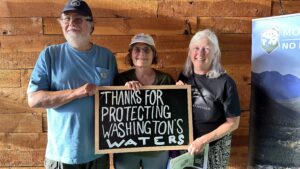
Securing these designations would not have been possible without the help of concerned citizens, including many CFC supporters! After attending an event supporting the new rule held at the beginning of September, Tara Easter submitted written comments and attended an in-person hearing in Kalama, WA.
“I felt it was important to show my support for these designations as a Washington resident concerned with the health and resilience of our freshwater ecosystems,” she explained.
The passion and advocacy of our community was a significant help in our efforts to see these new protections enacted. Thank you to everyone who submitted comments or otherwise supported this effort!
Thanks to the supporters who came out in support of Washington’s first ORW designations
In addition to added protections for the ecosystems and wildlife of the Green River, this designation is particularly helpful towards our long-term efforts to defend the surrounding area against the threat of mining. While these new protections do not explicitly prevent mining in this area, they will make it more difficult and costly to develop a mine here. In this way, the designation of the Green River as an ORW directly compliments our ongoing work with the Green River Valley Alliance to secure permanent protections for the area through a legislative mineral withdrawal.
We are thrilled Ecology has recognized the unique values of the waterways that have become Washington’s first ORWs—especially of the Green. Keep an eye out for an in-person celebration of these designations in the new year as we mark a successful end of this multi-year, collaborative effort.
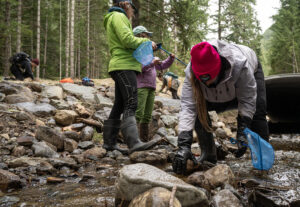
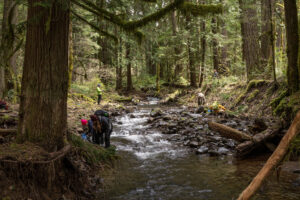
Near the Cispus River, beneath towering conifers and sheer rocky cliffs, Cascade Forest Conservancy staff and volunteers spent Earth Day weekend searching under rocks and logs, in and around small creeks, for various life stages of salamanders and frogs.
The work was the first step in CFC’s new study designed to understand how the salmon habitat recovery projects planned at our two survey sites will affect amphibian populations. Here in the Cascades, a place defined for many by its majestic mountain peaks and its iconic species like salmon, Roosevelt Elk, Douglas fir, and Western redcedar, small things can be easily overlooked. Too little is known about current populations of many species of amphibians in the Pacific Northwest, but these creatures play vital roles in healthy ecosystems and understanding how they are being impacted by habitat restoration efforts is key to preserving biodiversity in our region.
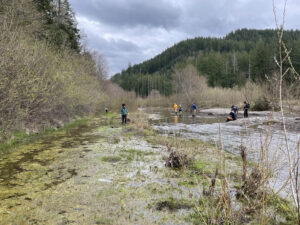
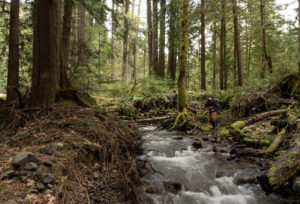
Volunteers and CFC staff searched two streams and the surrounding banks for amphibians.
To conduct our surveys along the creeks, CFC staff and volunteers split into three teams. Two groups worked across from each other on opposite stream banks and the third worked in the stream itself. Each terrestrial team began by measuring an area 50 meters long and 10 meters back from the water’s edge into the forest, then searched for a set amount of time before measuring out a new area and beginning the process again.
To conduct the surveys, volunteers split into three teams. Two terrestrial teams searched each bank, and the third team looked in the stream itself.
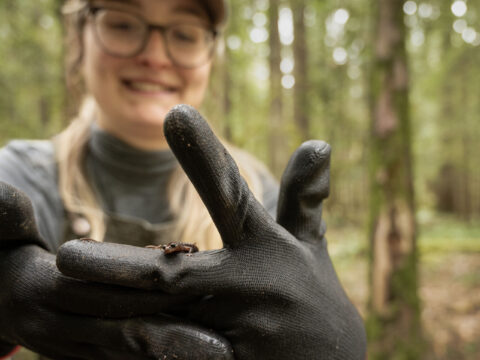
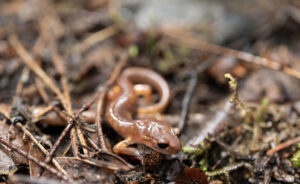
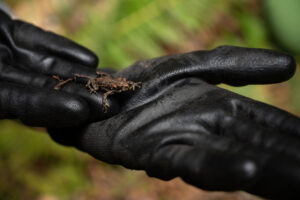
Turning over and carefully resetting the rocks and logs under which these species live meant getting low and close to the forest floor and stream bed. From these vantage points, the familiar forests look very different. The world of amphibians may be miniature, but it brims with life. The teams encountered subterranean networks of tunnels, a staggering array of mosses and fungi, and a diverse array of terrestrial and aquatic invertebrates. At the end of two days of searching, we found and documented 31 individuals from five species of amphibian; two terrestrial salamanders (ensatina and the western red-backed salamander) and three frogs (Pacific tree frog, western toad, and northern red-legged frog).
The terrestrial salamander, ensatina.
A red-backed salamander found during CFC’s amphibian survey.
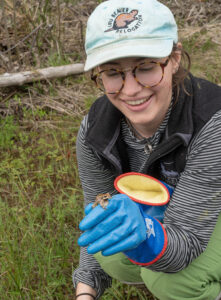
A volunteer holding a juvenile western toad. The oils on human skin can harm amphibians, so CFC’s staff and volunteers only handled specimens with gloved or wetted hands.
The stream team had less luck than the groups working the banks. Based on our locations and the characteristics of the waterbodies we searched, it was possible we would find egg masses or fully aquatic species like Cascade torrent salamander, Pacific giant salamander, or Cope’s giant salamander. We did not find any amphibian species in the creeks, but after the surveys, we decided to venture to the nearby Cispus River. There we found stagnant backwater channels that, lo-and-behold, had Pacific tree frog, western toad, and northern red-legged frog egg masses! This discovery reiterated the fact that these species, among others, need slow-moving water to lay eggs.
CFC’s staff and volunteers found amphibian egg masses and several species of frogs in an area of still water along the Cispus River just outside of the first survey area.
WSU Biology PhD candidate and amphibian expert, Julianna Hoza, found this northern red-legged frog in an area of slow-moving water near the one of CFC’s survey sites.
Later this year, CFC will be working to restore Camp Creek by placing more large woody debris into the stream. The lower reaches of the creek have great potential for being used as off-channel habitat for salmon. The addition of wood will create diverse salmon habitat in the form of slow-moving water for resting, cover from predators, and deposition of gravel for spawning. After our amphibian surveys, we can now hypothesize that the slow-moving water will not only benefit salmonids, but could also create more habitat for Pacific tree frogs, western toads, and northern red-legged frogs to breed since we know they are in the area. But then the question arises; if we are creating more salmon habitat and more amphibian habitat, are we just creating more food for the salmon? The impact of instream restoration on amphibian populations has not been well studied. Project partner, Julianna Hoza, with the University of Washington-Vancouver, is studying the impact of beaver dam analogs on amphibian populations, which inspired us to consider this for our upcoming studies.
Future restoration projects will create areas of slow water and diversify habitat to benefit salmon and other species.
We’ll start the restoration work with the Forest Service in August of this year. Changes to the water often occur quickly, but we’ll have to wait until spring to see what fish and wildlife have moved in. In early spring of 2024, we’ll be back out at the site to see how the placement of large woody debris has shaped the stream and to see if there have been any changes to the amphibian species that are utilizing the creek and surrounding areas.
A long-absent keystone species has returned to southwest Washington. On April 7th, 2023, the Washington Department of Fish and Wildlife released a report that confirmed the existence of a new wolf pack in a sparsely populated area on the Yakama Reservation, east of Mt. Adams.
Migrating wolves began returning to Washington in the 2000s from packs in Idaho, Montana, Wyoming, Oregon, and British Columbia. Their recovery has been closely monitored ever since. Washington’s Wolf Conservation and Management Plan divides the state into three zones, Eastern Washington (where most of the state’s wolves reside), Northern Cascades, and Southern Cascades and Northwest Coast. The Big Muddy Pack (named by the Yakama Nation for the Big Muddy Creek which flows east from Mt. Adams) is the first pack to establish a territory in the Southern Cascades and Northwest Coast zone.
WDFW map showing territories of known wolf packs at the end of 2022
So far, the Big Muddy Pack consists of only two individuals. One is a young male, WA109M, who set off from his central Washington pack in 2021 and eventually wandered more than 300 miles to Klickitat County. In April 2022, biologists observed WA109M traveling with another wolf who was later confirmed to be female. Two wolves traveling together in winter meet the state’s definition for a pack. The pair have now established a territory and it’s possible they will have pups soon.
WDFW photograph of WA109M
As modest as the Big Muddy Pack may be for the moment, the documentation of a new wolf pack in southwest Washington is historic news that many have been waiting a long time for.
Wolves were nearly eradicated across the continental U.S., including within the Pacific Northwest, by the first part of the 20th century. The gray wolf was listed as endangered under the Endangered Species Act when it was passed in 1973 and listed as endangered by the state of Washington in 1980. The species briefly lost its federally protected status in January 2021, but protections were restored in February 2022.
As the recent back-and-forth protection status changes illustrate, the wolf, perhaps more than any other animal in North America, elicits strong feelings and spurs passionate debates. To some, the federal government’s all-too-successful campaign to exterminate the gray wolf epitomizes the darkest and most ill-informed parts of America’s legacy of colonial expansion and the ecological destruction wrought by people who saw the natural world as something to be claimed and tamed. For them, the return of wolves is a sign that we are moving beyond old ways of thinking and allowing the natural world to heal. For others, wolves represent an unwelcome danger or a threat to rural livestock economies. There are effective co-existence strategies and compensation policies that ranchers and agencies can employ, but fear and distrust often end up taking center stage in some corners.
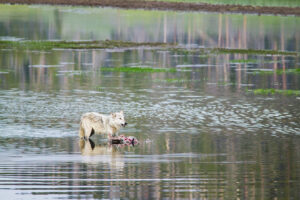
A wolf feeding in Yellowstone National Park
Wherever they appear (or reappear), the presence of wolves makes an impact, but not just symbolically or politically. Wolves are a keystone species that play a vital role in and bring balance to ecosystems. For example, the now-famous 1995 reintroduction of wolves to Yellowstone National Park led to a surprising number of positive impacts for ecosystems in the region. Without their primary predator, elk had overgrazed much of the park. The resulting loss of vegetation negatively impacted populations of mice and rabbits, as well as the animals that prey on them. Songbirds found fewer available nest sites. Even bears were impacted as the elk out-competed them for the berries they relied on. In riparian areas throughout the park, the absence of wolves had even more drastic impacts. Overgrazing in riparian areas led to erosion and stream sedimentation and a reduction of the abundance of beavers, fish, insects, birds, and river otters, compromising the health of entire aquatic systems. With wolves back in the mix, the ecosystem rebounded.
We can see the impacts that a century of elk and deer populations living without their main predator have had on riparian systems here in the southern Washington Cascades as well. It will take more than one pack of wolves to really affect the feeding and movement behaviors of their prey species, but we expect this relationship to be re-established at some point in the future. We look forward to the opportunity to assess how the return of wolves impacts ecosystems here and to better understand the role the species may have to play in supporting climate change resilience in our region.