A History of Leadership

As we come to the end of Women’s History Month, we reflect on the women who have led the fight for conservation in the southern Washington Cascades and who shaped our history as an organization.

We asked questions to three leaders: Susan Saul, who fought for the protection of Mount St. Helens and was a leader and co-founder of the Gifford Pinchot Task Force (now Cascade Forest Conservancy); Susan Jane Brown, an environmental lawyer and the Task Force’s first Executive Director; and our current Executive Director, Molly Whitney.

(Responses have been edited for clarity and length)

What first led you to pursue a career in conservation?

Susan Saul:

I grew up in Oregon. We lived “out in the country” so I spent a lot of time outdoors and my parents took the family camping in the Cascades and at the Oregon Coast for vacations. When I was 15, I went on my first backpacking trip and was introduced to hiking and wilderness camping. By the time I entered university, I knew I wanted a career that involved both writing and the outdoors. I met a woman who was the public affairs officer for the Willamette National Forest and she mentored me with advice regarding which classes to take. I graduated with a degree in Journalism with an unofficial minor in environmental education and interpretation. 

I worked for the U.S. Fish and Wildlife Service for 33 years in a variety of public engagement jobs, mostly with the National Wildlife Refuge System, so I had a paying career by day and a separate volunteer “career” by night and on weekends. 

Susan Jane Brown:

I grew up in a family that spent a lot of time in the out-of-doors, camping, hunting, fishing, so the environment was always something that was important to me. I also always wanted to be a lawyer, and in high school and college became aware that there was a discipline of law called environmental law. I set my sights on environmental law, and thus wanted to attend Lewis and Clark Law School in Portland, which is the number one environmental law school in the country. It was only once I got to law school that I fully came to understand the nature of public interest environmental law, which is what I practice today. 

Molly Whitney:

Being a born and raised Portlander, I think an appreciation for the natural world is in my blood. Also, my father is a biologist and learning about the ecosystems around me was a part of everyday conversation. I grew up on a trail or in a canoe exploring the world around me – rain or shine. I saw negative impacts of development and human interference, but also noted that there were many groups working to stop and or mitigate these impacts… I knew which side I wanted to work for. 

Was there someone or something that inspired you to become a leader in the field? 

Susan Saul:

I moved to Longview, Washington, to take my first permanent job. I joined the local Audubon chapter and the Mount St. Helens Hiking Club to find like-minded people for outdoor recreation. Quickly, older members introduced me to conservation issues in the Gifford Pinchot National Forest (GPNF), particularly around Mount St. Helens. I spent most of my free time hiking, backpacking, and scrambling with them so I got to know the places as well as the issues.

In the autumn of 1977, I saw a newspaper notice that a group called the Mount St. Helens Protective Association was holding a public meeting. I attended the meeting and joined the group. Local hikers, backcountry hunters and equestrians had formed the group in 1970 to seek national monument designation for Mount St. Helens but they hadn’t achieved much public or political traction. I had some ideas to build public support so I gradually took on a leadership role.

I was mentored by Joe Walicki, Northwest Representative for The Wilderness Society, Helen Engle of Tacoma and Hazel Wolf of Seattle, founders of many Audubon chapters in Washington state. Joe prodded me to get newspaper coverage for the Mount St. Helens monument proposal and to make my first constituent visit with Congressman Don Bonker of Washington’s 3rd District.

I attended the twice yearly Audubon Council of Washington meetings where I got to know Helen and Hazel and made presentations on conservation issues in southwest Washington. By the time Mount St. Helens erupted in May 1980, I had established recognition as a local conservation leader. State-wide conservation groups turned to me for leadership regarding how the conservation community should respond to the eruption.

Susan Jane Brown: 

I never intended to be “a leader,” but rather I love my job and the work that I do. I guess that passion and excitement is attractive to others, who want to share in that energy. I’m glad that I have partners who I get to work with that also inspire me to protect the wild places and critters that I love.

Molly Whitney:

I’ve been influenced by strong women in my family – to become a leader in any field. My grandmother earned her PhD when it was nearly unheard of for her generation… and my mother earned her MD. Matriarchs have led our family – they demonstrated that there is nothing that couldn’t be achieved if you worked for it and gender should never be a limiting factor. 

Susan, as you mentioned, you were an important part of the Mount St. Helens Protection Alliance that predated the creation of the Gifford Pinchot Task Force (which you went on to help establish). Susan Jane, you were the first staff person/Executive Director of the GPTF. What are the biggest changes you have noticed about conservation in the Pacific Northwest over your careers?

Susan Saul:

Women have always played a leadership role in conservation in the Pacific Northwest, but they had to fight for recognition of their skills and abilities. Men always wanted all the glory and tried to delegate women to making coffee and taking meeting minutes. I almost quit the entire conservation movement after three men from state conservation organizations drove down from Seattle, accepted my hospitality and proceeded to dictate to me a long list of tasks that I should do, without any offers of help, and unwillingness to acknowledge that I also had a full time job. By the end of the meeting they had me in tears. I called Helen Engle, who advised me: “Susan, just keep doing what you are doing and eventually they will recognize that you know more about Mount St. Helens than they do and they will leave you alone.”

Following passage of the Mount St. Helens Monument Act, my conservation leadership rolled over into working on the Washington Wilderness Act of 1984. I helped craft the campaign that was put together under the leadership of the Washington Wilderness Coalition (now Washington Wild) which was co-founded by a woman – Karen Fant. Many women were leaders in advocating for wilderness in their local areas. 

In 1984, the GPNF began work on its land management plan. I organized a meeting of representatives of all the interest groups in early 1985 to figure out how we wanted to deal with the planning process. At the end of the meeting, the group decided we needed a new, temporary organization to lead through the process and chose the name Gifford Pinchot Task Force (GPTF). Five years in, the GPTF had come up with innovative ideas, like creating our own alternative forest plan and getting it included in the Environmental Impact Statement. We had also been appealing timber sales and getting involved in other management issues so it made sense to keep the organization going.

I stepped down from leadership of the GPTF in 1993. By then, women were much more common as both volunteer leaders and paid staff for conservation groups.

Susan Jane Brown:

Probably the biggest change has been the focus of the United States Forest Service. When I started out, the agency was still clear cutting old growth in the Pacific Northwest, and despite the adoption of the Northwest Forest Plan, didn’t show signs of slowing down.  Now, a couple of decades on, the Forest Service has really turned a corner with respect to old growth logging: while it sometimes still happens, the agency is much more focused on restoration and collaboration rather than controversy and conflict.

Molly, why CFC? 

Molly Whitney:

The forests of the Pacific Northwest are iconic. I spent time in the Gifford Pinchot National Forest growing up… and I had no clue that these beautiful areas that I was experiencing were connected by being within the same National Forest boundary. I can’t remember when I was first introduced to the Task Force, but they, and then CFC, had been on my radar for a long time. When the posting for an Executive Director appeared, I jumped on the opportunity to be a part of this long-standing and impactful organization. 

Susan and Susan Jane; what excited you about where CFC is right now?

Susan Saul:

I am enthused by the continuing legacy of womens’ leadership of CFC, including not only Molly as the Executive Director but also the strong supporting roles of Lucy as the Conservation Policy Manager, Amanda as the Stewardship Manager, and Suzanne as the Restoration Manager. I think it is especially important that CFC has expanded its organizational role beyond conservation to also engage in stewardship and science and to partner with the Forest Service on shared projects and goals.

Susan Jane Brown:

CFC is in an interesting place right now: it is an organization that is changing and growing and has a lot of opportunities before it. I’m excited to see how CFC evolves and grows in the years ahead!

What do you see as the greatest opportunities for conservationists working in the Pacific Northwest in the next 5 years?

Susan Saul:

The “30 x 30” conservation target embraced by the Biden administration to protect 30 percent of U.S. land and coastal seas by 2030, with expanded funding opportunities coming through the Land and Water Conservation Fund and other programs. This target and associated funding may bring renewed energy to conservation campaigns like permanent withdrawal of the Green River area from mineral exploration and development and federal acquisition of the High Lakes area northwest of Mount St. Helens. 

Susan Jane Brown:

As the Forest Service has shifted away from its commodity production emphasis, the conservation community has a great opportunity to work with diverse stakeholders to develop a new vision for our national forests. In particular, the Northwest Forest Plan is scheduled for revision beginning this year, which means that land managers and the public have the chance to build on the important ecological successes of the Northwest Forest Plan and to address pressing issues such as climate change and wildfire risk reduction.  Because forest plans guide subsequent land management decisions, it is essential that forest plans – and the Northwest Forest Plan that covers the range of the northern spotted owl – contain requirements and limitations that will deliver those societal values. But we won’t receive those values without engaging and putting forward a proactive vision, which takes time and intention.

Molly Whitney:

Maybe I’m an optimist but I think that institutions are seeing some of our policies and law as dated and/or needing revision. Take the Northwest Forest Plan. I think we have opportunities to make contributions for the betterment of these policies as they are revisited. We have seen what doesn’t work – we, as conservationists, with growing public support, are situated to address them.  

What do you see as the greatest threat we will need to overcome?

Susan Saul:

A challenge, rather than a threat, is engaging the political support of Representative Jaime Herrera Beutler where federal legislation is needed to achieve conservation goals, such as a legislated mineral withdrawal for the Green River.

Susan Jane Brown:

Bureaucratic inertia.

Molly Whitney:

There are few places that are left intact and undisturbed by human interference. I think that these places, unless protected, are on the verge of being lost forever. We can always work toward restoration, but you only have one chance to protect something before it is forever altered. I think, as demands on our natural resources continue to expand, that we will have to work even harder to make sure that these rare places aren’t impacted. 

What is one insight that you think is unique to being a woman and a leader in the conservation movement?

Susan Saul:

About 10 years ago I was interviewed for a book, “Extraordinary Women Conservationists of Washington: Mothers of Nature.” My interviewer, Raelene Gold, asked me that same question and we discussed it at length since women’s contributions have until recently been literally left out of important conservation histories. We agreed that women often are more collaborative in their approach to achieving shared goals: women frequently have strong people skills, are more inclusive, listen more, read situations more accurately, and are more likely to build teams to solve problems. They learn from adversity, often with an “I’ll show you” attitude.

Susan Jane Brown:

As a woman in a male-dominated field (both conservation and law), I frequently see and feel the power imbalance inherent in my work. Once you are attuned to that inequity, you see it everywhere and want to address it, but systemic inequality cannot be solved by one person alone, but rather by the whole community sharing power. Getting the message across that the conservation community is stronger when we share power, rather than by treating conservation as a zero sum game where some win and some lose, is a challenge. But working with others who understand this dynamic and are also working to build power by sharing it is incredibly rewarding.

Molly Whitney:

There are new perspectives that can be brought to the conservation movement by people that haven’t been historically represented. There are many voices that need to be heard and I hope that women, as well as many other underrepresented groups, are finding their voices heard and recognized as the movement expands and becomes more diverse.

What advice would you give to girls and women interested in pursuing a career fighting for the natural world?

Susan Saul:

Don’t reject volunteering. I have never been paid for any of the 45 years of work I have described in this interview. There weren’t many paying jobs with conservation groups when I was starting out, and the few jobs that existed paid very little. Joe Walicki, the Northwest Representative for The Wilderness Society in the 1970’s, could not afford to own a car so he traveled around Washington and Oregon by Greyhound bus, couch surfed at the homes of conservationists, and relied on supporters’ generosity for meals and rides.

Find mentors. Take advantage of internships, temporary and seasonal jobs to explore your career calling. 

Susan Jane Brown:

Develop a thick, but compassionate skin. Conservation is a full-contact sport, and the losses are tragic: a special place is irreparably changed and perhaps lost, or a species is harmed, or water quality is degraded when our campaigns aren’t successful, and that hurts. Sometimes people operate from a place of fear and are unkind to others who are also working to conserve nature, even though we’re all on the same side, and that hurts.  But take comfort in the wild, because it appreciates your efforts, and in like-minded advocates, because they do too.

Molly Whitney:

Do it. If you find a connection, interest, or passion stemming from something in the natural world – follow it. You will be fulfilled if you are following something you love. Challenge the status quos and don’t be afraid to ask why things have been done a particular way… just because they’ve always been done one way doesn’t mean they should continue. Speak your mind, learn from those around you, and change the landscape in which you work and live.

ALERT: CFC and coalition files lawsuit protect the Pumice Plain

Monday, March 22

Today, Cascade Forest Conservancy and a coalition of scientists and conservation groups challenged in federal court a U.S. Forest Service plan to build a road through the Pumice Plain, the blast zone of Mount St. Helens National Volcanic Monument, to assess the integrity of a natural dam on Spirit Lake created by the volcano’s eruption in 1980. The road would end dozens of irreplaceable scientific research projects, many dating back 40 years to just after the eruption, by destroying research plots and permanently changing the unique ecological conditions in the vicinity.

“Callous land managers are seeking to exercise dominion over the landscape at Mount St. Helens, but this landscape is more than just special, and more than just delicate,” said Susan Jane Brown, staff attorney with the Western Environmental Law Center, and Cascade Forest Conservancy Board Director. “The Pumice Plain is teaching the world new things we couldn’t learn in any other way, in any other place, which is what Congress intended when it created the National Volcanic Monument. Prudent planning can achieve a win for everyone: to ensure public safety while preserving this scientific jewel and the future discoveries that require its continued existence.”

The 1980 eruption provided scientists and researchers a unique and rare opportunity to study ecosystem recovery and formation, available nowhere else on earth. Nearly all aspects of terrestrial and aquatic ecology are under investigation at Mount St. Helens generally and on the Pumice Plain and in Spirit Lake specifically. This research could prove enormously beneficial to science, nature, and even to society.

Many ongoing studies rely on a single plot at the location of the first known plant to establish on the Pumice Plain, which was found to host a previously unknown species of moth. The proposed route for the road would go directly through this plot, destroying it and forestalling the insights it would provide us about biodiversity and landscape regeneration.

“Over the past four years, we have offered the Forest Service many alternatives to this project that protect public safety, preserve research plots on the Pumice Plain, and mitigate environmental impacts. Instead, the agency is pushing this project forward without adequate environmental analysis, or consideration of the permanent impacts the construction of a road will have on this incredible landscape,” said Lucy Brookham, Policy Manager for the Cascade Forest Conservancy. “Our members will see 40 years of research destroyed, recreation in a no-longer roadless landscape permanently altered, as well as the progress of newly forming wildlife, watersheds, and plant species halted in their tracks.” 

In addition, the project would build a road on top of the Truman Trail, one of the most popular hiking trails in the Monument. This road would damage newly forming streams and watersheds, introduce invasive species, and severely detract from the experience of hikers on the only trail that connects public access from Johnston Ridge to Windy Ridge across the Pumice Plain.

The safety of residents downstream of Spirit Lake is extremely important, which is why thoughtful planning is essential. However, the Forest Service has not yet developed a comprehensive approach to ensuring the safety of downstream communities as well as protecting the internationally known research occurring at Mount St. Helens. Instead, the agency is piecemealing its management of this area. The Forest Service must achieve the shared goal of ensuring public safety while maintaining the Congressionally designated purpose of the monument: scientific study and research

“Insights from the scientists working at the monument inform ongoing restoration projects across Washington. Further understanding of these processes will be permanently destroyed if the proposed project is implemented as planned” said Becky Chaney, conservation chair of the Washington Native Plant Society. “The work is significant enough for WNPS to help fund the research through its grant program. The science on recovery and succession has resource and restoration applications to the conservation of native plants, to wildlife habitat recovery, and to my own work as a forest planning consultant.”

BREAKING: Judge rules federal agencies once again violated federal environmental laws in approving mining exploration near Mount St. Helens.

NEWS RELEASE | February 23, 2021

Portland, Or – Thursday, a federal court ruled that the Bureau of Land Management and the Forest Service violated federal environmental laws by issuing mineral prospecting permits to a Canadian mining company. The permits would allow Ascot Resources to drill 63, 2-3 inch diameter exploratory holes from 23 drilling pads across hundreds of acres of Washington’s Green River Valley adjacent to the Mt. St. Helens National Volcanic Monument to search for copper, gold, and molybdenum. Environmentalists say mining in the area would cause irreversible impacts to the environment, recreation opportunities, and drinking water. The lawsuit brought by Cascade Forest Conservancy and represented by Earthrise Law Center and Western Mining Action Project is the organization’s third lawsuit seeking to block the prospecting in Southwest Washington. The agencies withdrew their approval of the drilling in 2011 after a lawsuit was filed, and in 2014 the federal agencies’ attempt to approve the drilling was also struck down by the federal court.

The 55-page opinion, released on Thursday, held that the agencies violated the National Environmental Policy Act (NEPA) when considering recreation impacts. The opinion stated the agencies did not take a hard look at the impacts that 24-7 noise, created by the drill pads, would have on nearby recreators and how the project closures would prevent recreational access to the area. The judge also ruled that the agencies violated NEPA by failing to properly analyze the critical groundwater resources that would be affected by the drilling.

The Cascade Forest Conservancy, formerly the Gifford Pinchot Task Force, has been fighting mining outside of Mount St. Helens in the Green River Valley for over 15 years. Once considered for inclusion in Mount St. Helens National Volcanic Monument, parcels in the Green River Valley were eventually purchased by the Forest Service through the Land and Water Conservation Fund (LWCF). The LWCF purchase intended to promote recreation and conservation for the area; however, the public lands in question have been under assault from mining challenges since 2005.

The parties will now confer and likely submit additional legal briefs addressing remedy issues. The Court will then rule on the appropriate legal remedy for the federal agencies’ violation of federal law.

“This is a positive step towards preventing mining in this spectacular landscape,” said Lucy Brookham, Policy Manager for Cascade Forest Conservancy. “The Green River Valley is no place for a mine, and we hope the agencies’ decision to permit prospecting in this beautiful place will be vacated following this ruling.”

”Cascade Forest Conservancy has repeatedly asked the federal agencies to fully evaluate and disclose the impacts of the proposed mineral prospecting on outdoor recreation and groundwater resources, and those agencies have now failed to do so twice, said Thomas Buchele, Co-Director of the Earthrise Law Center. “Their failure to fully disclose the adverse impacts to outdoor recreational uses is particularly troubling because both agencies obviously know what those impacts will be but have chosen not to fully disclose them to the public.”

 “Once again, the federal court correctly found that the agencies’ review and approval of this ill-advised project violated federal laws designed to protect water and public resources,” stated Roger Flynn, Director and Managing Attorney of the Western Mining Action Project, a non-profit environmental law center specializing in western mining issues.

“There are, of course, parts of the Court’s opinion that we disagree with, including its interpretation of the Land & Water Conservation Fund,” said Molly Whitney, Executive Director for Cascade Forest Conservancy. “The funds Congress allocated and the Forest Service used for the purchase of these lands exist to provide the public with opportunities to enjoy and recreate on our public lands–the opposite of what an open-pit mine would provide to this landscape. We remain hopeful that the Forest Service will reconsider its consent after it has reevaluated and fully disclosed the impacts to outdoor recreation and groundwater resources from the proposed mineral prospecting.”

Thank You 2020 Volunteers

December 30, 2020

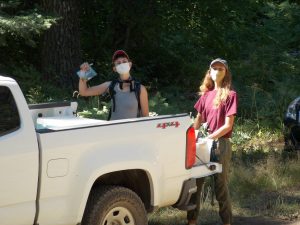
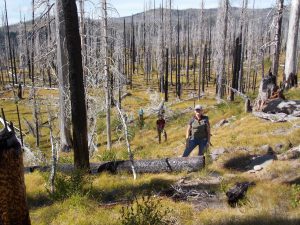
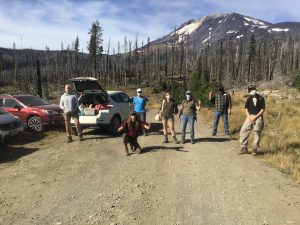
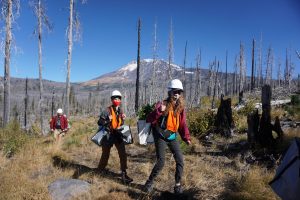
The scope of the accomplishments of Cascade Forest Conservancy’s on-the-ground restoration and conservation work wouldn’t be possible without the help of our dedicated community of volunteers. Year after year, these citizen scientists give their time and labor to make positive impacts in habitats across the southern Washington Cascades. We are always grateful for their help, but never more so than we are in 2020.

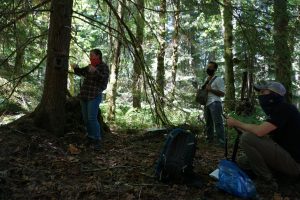
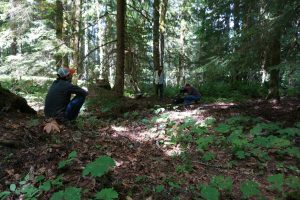
Sadly, many of the trips that had been planned for this year were canceled because of the COVID-19 pandemic. Other trips were adjusted so volunteers could participate with minimal risk of exposure.

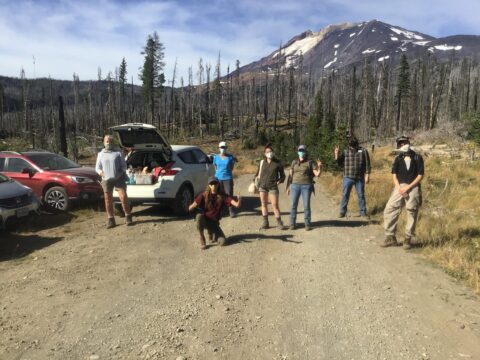
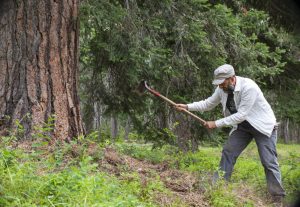
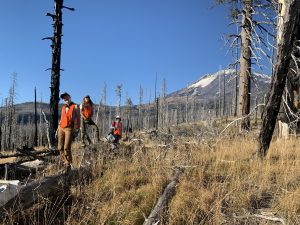
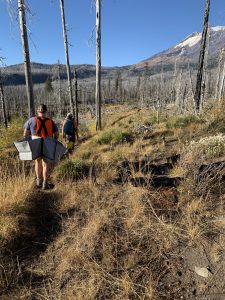
Our amazing volunteers donated over 500 hours of their time to important conservation and restoration projects across the Gifford Pinchot National Forest. They did demanding work; hiking, bushwhacking, duff raking, seed collecting, replanting and reseeding—all while wearing face masks and practicing social distancing.

Because of their love for our forests and their generosity, in 2020 we were able to:

    • collect thousands of images from wildlife cameras deep within the Gifford Pinchot. The data collected is helping scientists understand the distributions of reintroduced fishers (a native species that until recently had been extirpated within the Gifford Pinchot.) The camera data is also shedding a light on other wildlife throughout the region.
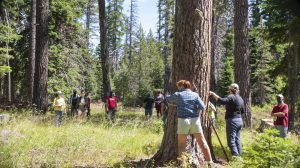
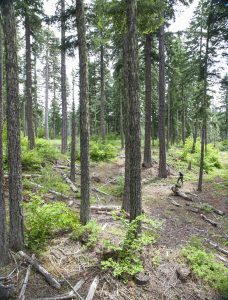
    • prepare ancient ponderosa pines across 95 acres for prescribed burning while collecting data to help forest managers understand the effects of fire in the unique forest near Mt. Adams.
    • plant more than 300 plants and reseed 20 acres of forest affected by three recurring burns in recent years.


The impacts of all this work will benefit ecosystems across the southern Washington Cascades for years to come. 2020 will be remembered as a uniquely challenging time, but also as one when people came together to protect and care for our common home. We couldn’t have accomplished all we did this year without our volunteers, thank you!

News Release: Cascade Forest Conservancy Launches Groundbreaking Aquatic Restoration Initiative in SW Washington

12-16-2020

News Release


The Cascade Forest Conservancy has launched a new initiative called the Instream Wood Bank Network. The network has the potential to revolutionize the scope, scale, and efficiency of aquatic restoration in southwest Washington and beyond.

The Instream Wood Bank Network was designed by Shiloh Halsey, Cascade Forest Conservancy’s Director of Programs, to address two challenges common to restoration professionals throughout the West; a lack of wood in streams and rivers and difficulty sourcing the wood needed for restoration.

Restoration experts say that before the removal of old-growth trees along rivers and streams, waterways contained more downed trees which diversified aquatic habitat and created deep cool pools needed by many aquatic species, including salmon, steelhead, and various trout species. Climate change is warming rivers in the Pacific Northwest, creating dangerous and potentially fatal conditions for migrating salmon and steelhead, making cold water refugia increasingly important to the survival of spring and summer runs of wild fish. (See Chuck Thompson’s July 23, 2020, piece for Columbia Insight “Thermal hopscotch: How Columbia River salmon are adapting to climate change” https://columbiainsight.org/thermal-hopscotch-how-columbia-river-salmon-are-adapting-to-climate-change/ )

“There is a pressing need to restore fish habitat on a large scale. There are fallen trees and logs on timberlands that can’t be sold—all of which could be used to help build back this habitat. But, there has never been a system in place to connect these two ends,” said Halsey. “And that is exactly what the Instream Wood Bank Network is designed to accomplish.”

The network sources non-saleable wood, then employs local contractors to move wood to a series of wood banks that are set up across the region. The network then provides these logs to restoration groups throughout southwest Washington.

“This is a game-changer for aquatic restoration,” said Brice Crayne of the Lower Columbia Fish Enhancement Group, one of many partner groups benefiting from the new initiative. Other partners and stakeholders include Cowlitz Indian Tribe, South Puget Sound Salmon Enhancement Group, U.S. Forest Service, Washington Department of Natural Resources, and others.

In addition to supplying wood for restoration, the network advances restoration in new areas by helping to prioritize, design, and coordinate the installation of small and medium-sized wood structures to increase restoration efforts in critical habitat areas not being addressed through existing efforts.

The network is currently focused on restoring watersheds in the southern Washington Cascades. With time, the Cascade Forest Conservancy hopes to expand the network into other areas of the Cascades.

More Information:

https://www.instreamwoodbanknetwork.com

Beaver Reintroduction Update II

December 10 2020

Our Science and Stewardship Manager, Amanda Keasberry, and our partner Jesse Burgher, a grad student at  Washington State University-Vancouver, recently set out on a beautiful sunny November day to check in on a pair of beavers released into the forest earlier this fall. Last year, some of our supporters won the privilege of naming some of the beavers released in 2020. This pair were dubbed Cornelia and Gifford.


Although the male has been located several times before, the team wasn’t able to locate him on this trip, but neither are worried. “It’s typical for one beaver to go off exploring while the other waits at home,” explained Keasberry. She added that the deep snow limited their access to the creek so the area they were able to search in was restricted. 

Speakers of the Algonkian language, including some of the first tribes encountered by British colonists, call the full moon in November the beaver moon. It is the time when beavers prepare for the winter by storing food and setting up their dens and lodges. By now, Cornelia and Gifford are probably ready for the winter months. Jesse will continue checking in on the beavers every month. Stay tuned for future updates.

New study highlights the importance of beaver reintroduction work in the southern Washington Cascades

A newly published study from our Partners at Washington State University partners confirms the importance of beavers for wildlife and climate resilience. reintroduction work. This research shows that beaver-affected habitats in the southern Washington Cascades increase the presence and diversity of slow-developing amphibian species, such as the vulnerable Oregon spotted frog.

CFC’s beaver reintroduction work is an effective and important component of ecosystem-based restoration work, management, and climate adaptation efforts. As northern temperate wetland ecosystems like those found within the Gifford Pinchot NF, face increased summer drying in the coming years, beaver-affected habitats may become increasingly important climate refugia critical to the survival of a number of species.

Read the article here.

Beaver Reintroduction Project Update

October 26th 2020  |  Amanda Keasberry

Cascade Forest Conservancy is working to restore beavers to areas of the forests where they are absent. European settlement and the fur trade that fueled it reduced beaver populations to as few as 100,000 animals by the turn of the 20th century. In the last 100 years, their numbers have rebounded significantly, but are still only a fraction of historic levels. Many plants and animals in North America evolved in a world shaped and constructed by beavers. These rodents, and the habitats they create, are still essential to healthy watersheds and forests.

Reintroducing beavers is one of our best tools for protecting and restoring ecosystems across southwest Washington. This year, we’ll be moving 3-4 families of beavers from areas where their penchant for building is impacting human infrastructure to places in the wild where they are most needed.

Early last week, we got the call that our wildlife trappers caught our first beaver of the season! We met the trapper at our beaver housing facility and learned that we had a 2-year-old, 29 pound male. We were informed that he definitely had a mate or sibling that we would need to get before we released them into their new home in the Gifford Pinchot National Forest. 

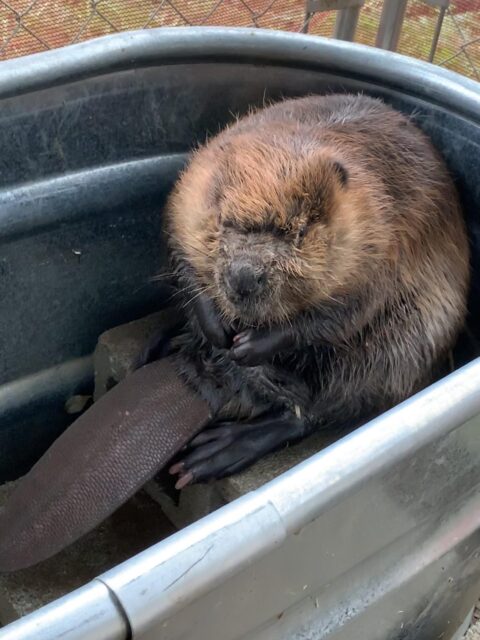
Trapping beavers takes experience and knowledge, which is why we are working with licensed trappers. The trappers position the trap so it is partially in the water and place vegetation and castor lure to attract the beavers. Once one beaver is trapped, the other beavers are quick to become skeptical of the traps near their home. It is not uncommon for them to retreat for a couple of days after traps are set. The photo below shows the 2-year-old male beaver in the box trap he was caught in.

Two days later, the trappers had news that they caught the 2-year-old, 24 pound female beaver that was living with the male beaver. The female was quick to hide when we put her in the facility and the male immediately went over to her. She stayed tucked away and the male went and sat next to her. It was a clear sign that they remembered one another and that we should leave them be! The next afternoon we found the snuggled together in their lodge. As we began to clean the housing facility, they jumped into one of their pools while we were cleaning it out. It was safe to say that they seemed happy to be reunited with one another! 

The trappers were pretty confident that these two beavers were the only ones living together, but they kept the traps out for a few more days before we made the call on releasing them to their new home. We are only allowed to house the beavers for two weeks so we don’t leave too much of an imprint on them from human interactions. We had the male for 5 days and the female for three, so we thought it was worth it to wait and see if they had anyone else in their family. So, the beavers hung out for a few more days doing beaver activities like swimming, grooming, sleeping, and eating. 

After a week in the facility, the beavers could now get back to being wild beavers. In their previous home, they were negatively impacting infrastructure that was near their creek. Now, in the national forest, they can construct their dams and lodges where there is minimal risk of damaging any infrastructure. Ideally, the beavers will stay where they were released but no matter where they go, they will provide the ecosystem with numerous benefits like creating in-stream habitat for a variety of species, stabilizing seasonal flows, capturing fine sediment, and recruiting riparian vegetation.

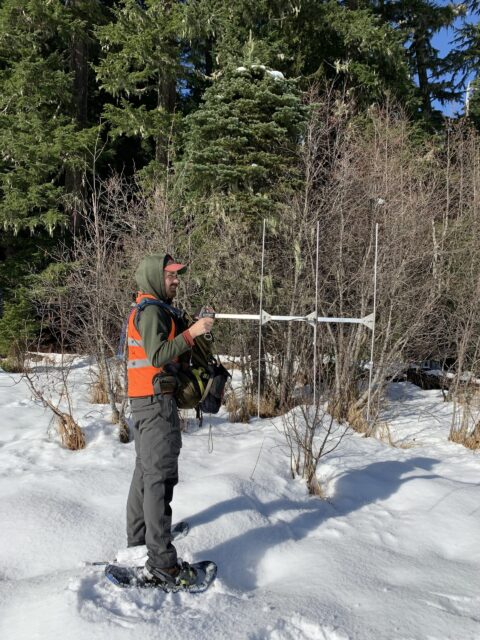
In addition to the wildlife camera, this pair of beavers were also outfitted with radio transmitters for a study being conducted by WSU-Vancouver and WA Dept. of Fish and Wildlife. We will be able to get daily locations about where these beavers are moving within the system. A graduate student with WSU-Vancouver is currently out tracking the movement of our newly released beaver pair. Over the first few days the beavers have up and downstream from the release location but have stayed within a half a mile of the release. The radio transmitter tracking will occur for two weeks and then two weeks after that CFC will go out to look for dams, lodges, and other signs that the beavers have decided to make this spot their new home! 

WHY ARE FIRES IN THE PACIFIC NORTHWEST GETTING WORSE?

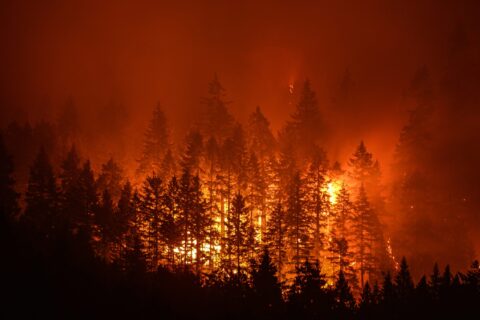
Last week, more acreage in Washington burned during a single day than had during the last 12 years combined. Record-breaking fires are burning across the West. Our thoughts are with the thousands of people who have been forced to make the painful decision to flee their homes, not knowing if they will ever see them again. Entire communities have been destroyed, and people have even lost their lives. 

You can help people affected by fires by donating to the Red Cross Western Wildfire Relief fund here.

FIRES ARE A NORMAL PART OF FOREST ECOLOGY IN THE PACIFIC NORTHWEST, BUT THESE FIRES ARE DIFFERENT. WHY ARE THESE FIRES SO DANGEROUS, AND WHAT CAN WE DO ABOUT IT?

Wildfires shaped the evolution of the plants and animals in our region and remain important to our region. Healthy Pacific Northwest forests are complex patchworks of stands in various stages of growth and regrowth. They are young and old, disturbed, undisturbed, and ever-changing. One reason they look this way is that wildfires do not burn through an area uniformly. Some forest stands in fire-affected areas will ignite while others escape untouched. The resulting mosaic of varied habitats supports diverse communities of plants and animals including some species that thrive in these unique post-fire conditions.

But studies are showing that today’s fires are more intense, and some are burning the same areas in quick succession, compared to historic patterns. These “short-interval”, high-intensity fires are negatively affecting increasingly rare old-growth stands, which are evolved to be resilient to fire, but can still be damaged by high intensity and repeated burns. These fires are also making it harder for affected areas to bounce back by depleting seed banks, and eroding forest soils. CFC staff have seen firsthand what scientists are describing. Some of the post-fire areas we’ve visited that should have been sites of vigorous regrowth were recovering slowly and with low biodiversity compared to what we typically expect to see.

A major contributing factor to the current situation with wildfires is ongoing climate change. Rising temperatures and changing weather patterns have left our forests particularly dry and warm. “Forest fuels” are as dry as they’ve ever been, and are releasing more energy when ignited, meaning fires are hotter, more destructive, and more unpredictable. In Oregon and Washington, big fires usually occur less frequently on the west side of the mountains and more commonly in more arid climates east of the Cascades. This year’s drought conditions have enabled fires to burn in areas close to major population centers west of the Cascades—areas that are too damp to sustain major burns most other years. Although climate change is the primary reason fires in the west are getting worse, it is not the only factor.

Not only are fuels drier and more volatile, they are also more abundant across our forests. For generations, indigenous people used controlled fires to sustainably manage the forests in the Pacific Northwest. But settlers and colonizers dangerously mismanaged the forest to devastating effect. Federal and State government agencies adopted policies of universal fire suppression and other unsustainable forestry practices. Across America, many fire-resilient, biodiverse old-growth forests have been clear-cut and replaced with crowded, overgrown, homogeneous, single-species stands of trees designed to grow fast and be harvested for maximum profits. Over the last hundred years, responsibly managed, dynamic, and healthy forest ecosystems have been systematically replaced by what is essentially a tinderbox.


What can be done to prevent severe fires in the future?

One of the most commonly proposed solutions to the problem is thinning. But thinning these forests alone doesn’t help and in many cases, it exacerbates the problem. Thinning that focuses on removing large trees—the most fire-resistant material—will do more harm than good from a fire resilience perspective. Responsible thinning in conjunction with prescribed burns, like the current work happening to protect old-growth ponderosa pine and douglas fir stands south of Mt. Adams, can do a lot to protect mixed conifer forests from wildfire. While these and similar methods can help protect specific stands in certain types of mixed conifer forests, this doesn’t apply universally to all forests in the western US and there is no realistic way to continually protect 350 million acres of overgrown forests from severe fires. 

The problem of intensifying wildfires is a complicated one, and no single solution will work in every forest. The effects of climate change will likewise not be the same for every forest, but will continue to cause universally destabilizing effects. Our best chance to prevent the situation from becoming worse is to do all we can now to stop or slow climate change. Fire-proofing homes and properties in forested areas is another important step for reducing the life-changing impacts of these types of fires. 

We expect unusually large and severe fires in our region to continue happening, so Cascade Forest Conservancy is working to help make our forest more resilient to fires now to mitigate some of the damage when it does happen. We address the issue using a wide variety of tools, from scrutinizing proposed timber sales to ensure they account for insights from current ecology and climate science, to working on-the-ground to restore habitats to more natural conditions, therefore reducing the risk of catastrophic burns. For example, post-fire seeding can help kickstart regrowth and biodiversity in areas impacted by successive fires, and dams built by beavers we reintroduce help store water higher up in watersheds, which slows some of the drying resulting from climate change and helps create fire breaks.

TAKE ACTION

Do your part to help elect local, state, and federal officials who believe in climate science and will fight to reduce greenhouse gas emissions and conserve our forests.

Take steps to reduce your carbon footprint.  

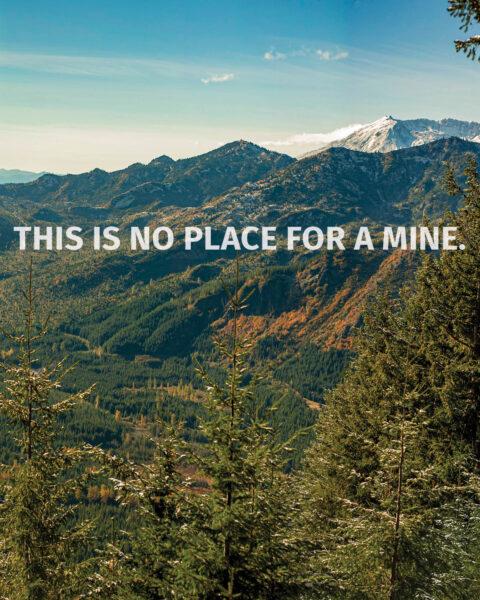
UPDATE: MOUNT ST HELENS IS NO PLACE FOR A MINE

August 30, 2020

We have some important updates about our work to protect Goat Mountain and the Green River Valley from hard rock mining. A September 18 hearing date has been set in our case against the Forest Service and Bureau of Land Management (BLM). Oral argument will be held remotely rather than in a courtroom. It is currently unknown who will be able to watch the arguments, but we will update you as we learn more.

Why did we sue?

In the final weeks of 2018, the Forest Service and the BLM granted a Canadian company, Ascot Resources, permits to drill 63 exploratory boreholes 2 to 3 inches in diameter on and around Goat Mountain, despite the comments and objections of Cascade Forest Conservancy and opposition from tens of thousands of concerned individuals and other organizations. In response to the decision, we filed a lawsuit because we believe the permits issued are illegal. A portion of the area in question was purchased with funds from the Land and Water Conservation Fund (LWCF), which is specifically allocated for purchasing land for the purposes of recreation and conservation. Furthermore, the exploratory drilling permits were granted without the necessary analysis required by the National Environmental Policy Act (NEPA) leading to a Finding of No Significant Impact–or a determination (which we believe to be false) that the project will not have any significant impact, negative or positive, on the environment. 

Why is an exploratory drilling permit such a big concern?

Drilling exploratory boreholes will cause significant negative impacts on the area and the people who enjoy it. The Ascot proposal involves reactivating old roads in pristine forest to transport trucks and heavy equipment to drill sites. Harmful chemicals would be used at the drill sites, some of which are located within 100 feet of waterways, and the constant noise of equipment would disturb wildlife and ruin some of the best fishing, hunting, hiking, horseback riding, and outdoor recreation opportunities in Washington State.
Our biggest concern, however, is that if significant mineral deposits are found, stopping an open-pit hard rock mine may become very difficult. Our best chance of protecting this place and the surrounding areas is to stop the mining process now, not later.

What is at stake?

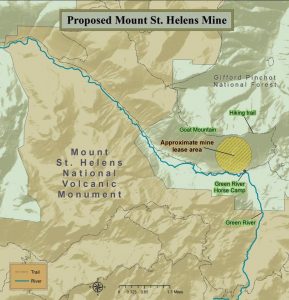
Goat Mountain and the Green River Valley are situated just beyond the borders of the protected Mount St Helens National Volcanic Monument. In fact, as you can see in the map below, the boundary lines of the monument were drawn specifically to exclude the area from protection because of the possible value of the mineral deposits that may lie there. The monument was formed in 1982. During the years of the Regan administration, excluding these areas from protection was a necessary compromise to achieve protections for the rest of the mountain, but one that left the region vulnerable to mining threats.

The slopes of Goat Mountain are home to some of the only old-growth forest stands in the area to survive both the intensive logging of the preceding decades and the 1980 eruption. The Green River flowing directly below is a recognized gene bank for wild steelhead, and an eligible Wild and Scenic River. A mine would completely decimate this landscape. We are also concerned by the toxic chemicals that are used in hard rock mining and stored in tailing ponds. These toxic ponds would pollute waterways and poison drinking water far beyond the immediate area if (or more accurately when) the pond leaks and breaches into the Green River, which flows into the Toutle, then into the Cowlitz. There is no way to mine safely on the slopes of an active volcano and in a seismically volatile landscape. If a mine is excavated the impacts of the damage will be felt for hundreds of years.

What are our next steps?

Even if we win in court, this fight will not be over. Similar permits have been approved and ruled illegal in the past. The only way we can protect this area from mining, in the long run, is to secure permanent protections for the Green River Valley. 

Cascade Forest Conservancy will make sure to keep you up to date on this issue. You can help us by making a donation to support our work to protect this landscape here.

A NEW THREAT TO MATURE FOREST: THE INCREASING PUSH FOR THE CREATION OF EARLY SERAL HABITAT

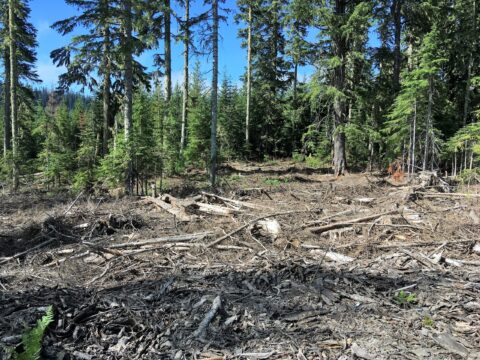
In the past few years, Cascade Forest Conservancy has become increasingly concerned about the reemergence of regeneration harvest on National Forests and public lands. Regeneration harvest is a harmful harvesting practice, similar to a clearcut, where only 10-20% of the tree stand is left behind. While conservationists see regeneration harvests as harmful to forests, it is lucrative for landowners, timber companies, and land management agencies. Regeneration harvest is not a new issue. However, the inclusion of this method to create early seral habitat is something we are experiencing with increasing frequency and scale on the Gifford Pinchot National Forest.


WHAT IS EARLY SERAL HABITAT?


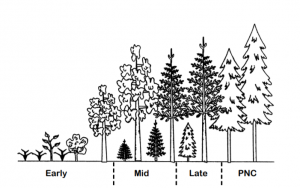
Following a stand disturbing event like wildfire, disease, and major wind disturbances, a forest typically progresses through several stages from its resurgence to becoming an old-growth stand. The different types of forest habitat created throughout this process can be categorized in seral stages.

As seen in the diagram above, the early seral forest stage is initially dominated by grasses and shrubs. Shade-intolerant tree species also establish in the early seral stage. The mid seral stage has a mix of species, with early seral species and mid seral species present in almost equal amounts. Late seral stands have both mid seral and late seral tree species present. The Potential Natural Community (PNC) stage where old-growth trees are present, features a composition where early or mid seral species are scarce or absent altogether.


WHAT THAT GENERALLY LOOKS LIKE IN THE FOREST:


EARLY SERAL – Grass and seedlings

MID SERAL – Saplings and young forest

LATE SERAL – Mature forest

PNC – Old-growth forest

Different kinds of wildlife prefer different seral stages as their habitat. For example, certain birds, butterflies, and moths prefer early seral habitat, whereas the northern spotted owl requires late seral and old-growth forest. Healthy forests contain a mix of various stages of regrowth.


WHY IS CLEARCUTTING MATURE FOREST TO CREATE EARLY SERAL SO PROBLEMATIC?


Although early seral habitat is less abundant on the landscape than it has historically been, sacrificing mature forests to restore early seral habitat does not make sense. Early seral habitat can be created relatively quickly and easily; late seral habitat and mature forest can only be created with time. Additionally, the quality of early seral habitat created by stand-replacing wildfire or disease cannot necessarily be recreated by regeneration harvest. What this means is that we could end up losing critical mature forest on the landscape to create a habitat that may not provide the ecological benefit used to justify creating early seral through harmful forest management practices in the first place.


WHAT HAS REGENERATION HARVEST AND EARLY SERAL CREATION LOOKED LIKE ON THE GIFFORD PINCHOT NATIONAL FOREST?


Cascade Forest Conserevancy has encountered timber sales for the last few years that have incorporated regeneration harvest for early seral creation. Six years ago we weighed in on Swift, a timber sale in the Mount Adams Ranger District (MARD) that proposed just under 200 acres of regeneration harvest. Through our work in the collaborates and participation in the public commenting and objection process, the size of the regeneration harvest was reduced to 123 acres. We are now faced with a new proposal in the Upper Wind planning area of MARD that proposes 450 acres or regeneration harvest with nearly 200 acres proposed in mature, 120-year-old forest. We are concerned with the scale of regeneration harvest and the inclusion of critical mature forests. We will be working with our collaboratives and the Forest Service, as well as participating in the public commenting process over the coming months to remove older mature forest stands from the proposal and reduce the overall acreage of regeneration harvest.